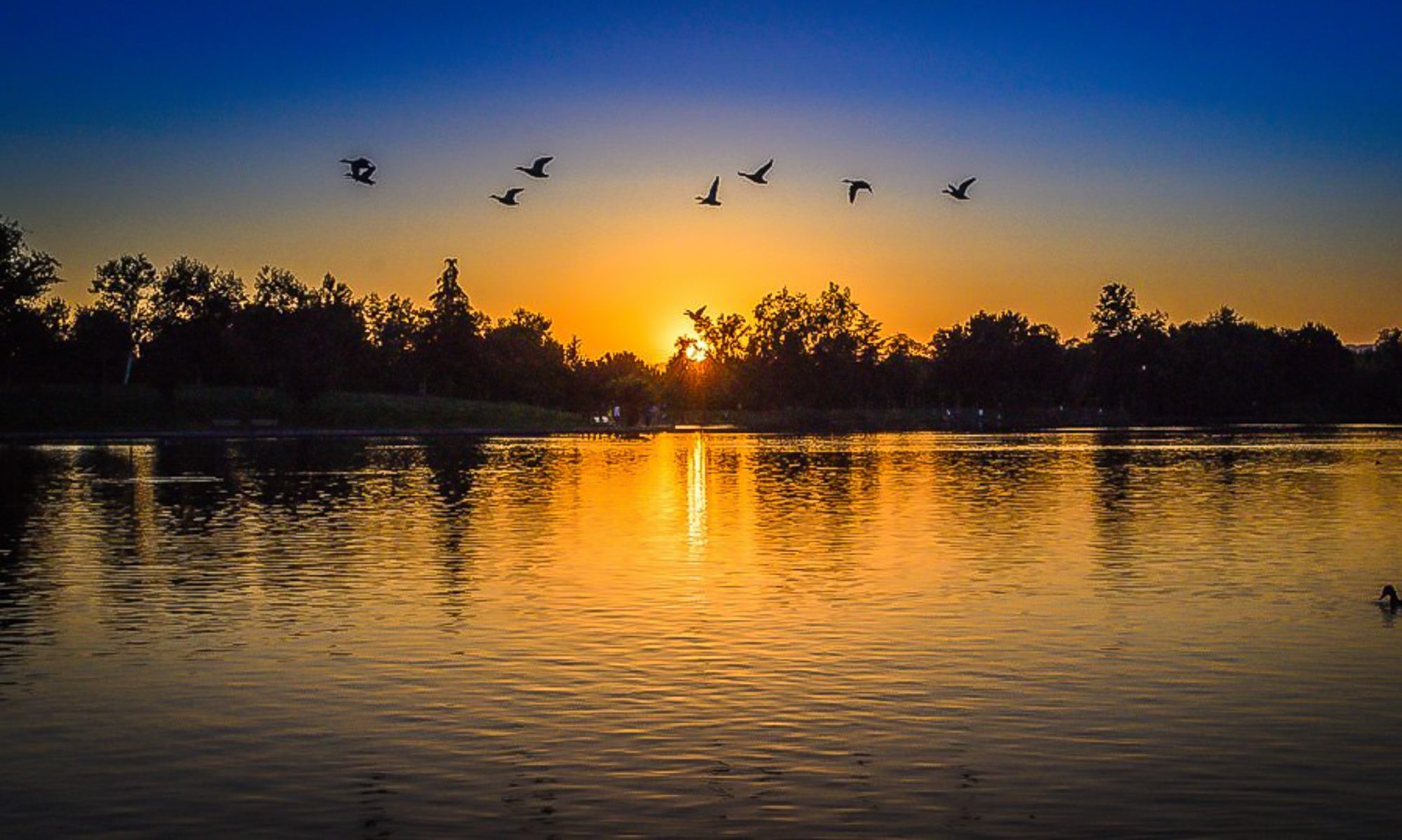


Click any stanza to explore its analysis, or use the icons above to navigate between views.
Narrow Passages
Poet: Dr. Alireza Bemanian
|March 21, 2026
© www.bemanian.com
Select a stanza to traverse its meaning.
Narrow passages through the orchards, copses, and coppices; thinness, feebleness and tightness,
apple trees twist and mangle, an aligned and united gesture, which provide passers’ shelters,
the curvatures, warps and twists, penetrate and pierce.
Silence, reticence, reserve and restraint; pacify and soothe, the absence, dearth and lack; and the short-sightedness, the sneaky dark spots, sneer and snarl, smirk and grin; the stare and leer, the thunder and roar traumatize, lacerate, splinter and rupture, to foment and foster; the leading escorting and steering phantoms, phantasms, and spies and infiltrators, the pillagers and plunderers, amalgamation and permutation narrow mindedness commence and accept.
The silence, reserve, and reticence, render and bestow, depict and provide, the bequeathed, conferred moments, the jiffy and flash, or the spark and spike twinkle, mesmerizations, captivations, and enthralls defy, not all to rebuff, or strike—
Inner beguilements or fascinations, engrossments and enchantments, encapsulations and abridgements, commemorate and venerate, brilliance, dazzle, gleams and shimmers, spontaneously and impulsively esteem and honor, glares and stares, instances, pleas and urges, the wonders of sight and scene linger and surge.
The gaze and glare, the stroll and ramble, follow and shadow the sailing and gliding breeze on the face. While, the narrow passages, the paths and orbits snake and bend, the breath, the junctures, connections and joints, to inhale, exhale, convene and convoke, the conferred, deliberated, and conversed bonds and conventions, hesitate to be unheeded, nor to be snubbed and contravened; the essence, kernel and core, twist and turn, rove and meander.
Whereas, promptings and evocations, intimations and insinuations, allusions and indications tweak and warp, curl and kink, and curve and contort— choices and picks, limits and scales, and sets and spans, ensue, engrain and entrench; creation of mindsets, formation of beliefs and convictions, the manifestations, advents, and pretenses spread and expand, entropies and edicts merge hand in hand, jabbing and jutting boundaries and confines.
Commemoratives, tributes, and esteems, cultivate, flourish, and mature,
the seeds, pits and stones, sow and spread, fling and strew; insights, acumens or guiles, do not stand still, jumble and muddle to heap and expand; it is the footnotes, addendums, addenda, that barely merely pursue the stance, sunshine to submerge, bends on sitting sands.
Arrows and cursors, bites and stings, shall only suppress the forgotten fates, projectiles pertain, tracks and roadways convolve, convolute and prevail, hinderances, bumps, the thuds and thumps, hiccups to contain, restrains to check, are pawns and forfeits, to carry paving the yarns and tales; the dawns, sunrises dribble and convey; it is agility of allocated rapt resolutions and remedies, to surmise and foresee.
Astoundingly and amazingly, vivaciousness, animations, the exuberance and liveliness, march to thrive, tramp and strut to persist, parade and stride not to descend and settle, while the continuum and range, the scope and breath, intactly, collectively, and sinlessly aim and level, and seek and concede.
Alireza Bemanian • March 21, 2026 • © www.bemanian.com
Stanza Analysis
Analysis Documents
Dual Perspectives on “Narrow Passages”
Foundational Analysis
Primary Conceptual Architecture
Analysis and Commentaries
Formal Analysis: "Narrow Passages"
Poem: "Narrow Passages"
Poet: Dr. Alireza Bemanian
Date of Composition: February 13, 2026
© www.bemanian.com
A Formal Examination of Dr. Alireza Bemanian’s Poem on Constriction, Darkness, and the Sinless Architecture of Seeking
From the Sneering Dark Spots of the Orchards to the Sinless Aim of the Continuum
I. Introduction
"Narrow Passages" enters Dr. Bemanian’s Odyssey collection as a poem of startling tonal departure—a work that exchanges the oceanic expansiveness and divine partnership of "Mesmerize and Fascinate" for something darker, more claustrophobic, and ultimately more psychologically complex. Where the preceding poem mapped rivers flowing to oceans and devotees partnered with the divine, this poem plunges the reader into narrow corridors through dense, enclosed woods—orchards, copses, and coppices—where phantoms escort the traveler and darkness personifies itself through sneers, snarls, and malicious grins. The journey here is not expansive but constricted, not oceanic but labyrinthine.
The title announces spatial constraint as the poem’s governing condition. "Narrow Passages" are corridors that permit movement but restrict it, paths that allow travel but force intimacy with everything they contain. The traveler cannot avoid what lines these passages—the dark spots, the phantoms, the infiltrators—because the walls are too close for evasion. This enforced proximity becomes the poem’s epistemological principle: understanding comes not through breadth but through the claustrophobic intensity of constrained passage. One learns not by surveying vast horizons but by being pressed against the very things one might prefer to avoid.
The poem unfolds across eight sections of varying length, tracing an arc from menace through paradox to moral purity. The opening section unleashes the poem’s darkest imagery—pillagers, plunderers, spies, phantasms—before the second section reverses course to reveal that the same silence harboring these threats also "renders and bestows" gifts of mesmerizing moments. The middle sections navigate the tension between inner fascination and external influence, tracking how beliefs and convictions form through the subtle warping of intimations and insinuations. The poem culminates in a vision of extraordinary moral clarity: the continuum of existence aiming "intactly, collectively, and sinlessly" to seek and request.
What distinguishes "Narrow Passages" within the Odyssey collection is its adoption of the poem form—a deliberate choice that mirrors the poem’s content. Where Dr. Bemanian’s stanza-structured poems allow breathing space between movements, the poem’s unbroken paragraphs force continuous reading, denying the reader the comfort of line breaks, enacting the very claustrophobia of the narrow passages themselves. The form becomes the content: to read this poem is to travel through it without relief, pressed against its dense accumulations of language exactly as the traveler is pressed against the walls of the passage.
The poem’s relationship to "Mesmerize and Fascinate" is one of deliberate contrast and hidden complement. Where that poem’s hydraulic theology insisted that flow must be maintained or content turns to "bunkum, balderdash and tripe," "Narrow Passages" examines what happens within the channels through which that flow moves. The streams of "Mesmerize and Fascinate" require riverbeds; "Narrow Passages" is the poem of the riverbed itself—the constrained, winding, sometimes threatening structure through which consciousness must travel. If the earlier poem asked why flow matters, this poem asks what the flow encounters along the way.
The poem’s signature technique—Dr. Bemanian’s cascading synonym-chains—operates differently here than in his verse poems. In "Mesmerize and Fascinate," the accumulations of near-synonyms created a sense of abundance and overflow. In "Narrow Passages," the same technique creates claustrophobic density. The walls close in with each added term: "thinness, feebleness and tightness" doesn’t expand our understanding so much as press three qualities together until no space remains between them. The synonym-chains become the narrow passage’s walls, the language itself constructing the constriction it describes.
Perhaps the poem’s most remarkable achievement is its trajectory from darkness to moral purity. It begins with pillagers and plunderers and ends with sinless seeking. The passage through narrowness—through threat, through the subtle warping of perception, through the barely-restrained distribution of value—arrives at a place of collective, intact, and sinless purpose. The narrow passage, it turns out, was not an obstacle to be overcome but a crucible through which consciousness must pass to emerge purified. The poem’s architecture argues that moral clarity is not achieved despite constriction but through it.
II. Conceptual Architecture: Section-by-Section Analysis
Section 1: The Threatening Passage
The poem opens with immediate spatial immersion: "Narrow passages through the orchards, copses, and coppices." Three near-synonyms for small, dense woodland areas establish the setting—not grand forests but intimate, enclosed groves where trees crowd close and visibility is limited. "Copses" and "coppices" are technically distinct (a coppice is a managed woodland, a copse simply a small cluster of trees), but their sonic near-identity creates a claustrophobic echo, as if the woods themselves are repeating, closing in.
The qualities of the passages follow: "thinness, feebleness and tightness." "Feebleness" is the most striking of the three—it suggests not only spatial limitation but vulnerability. The passage is fragile, easily damaged, perhaps unreliable. The passages don’t merely exist; they "penetrate and pierce"—active, violent verbs that reverse the expected relationship. It is not the traveler who penetrates the passage but the passage that penetrates the traveler.
Then silence enters, characterized through four near-synonyms: "Silence, reticence, reserve and restraint." This quadruple characterization distinguishes between types of quietness: silence is the absence of sound, reticence is the withholding of speech, reserve is emotional guardedness, and restraint is the active suppression of expression. Each represents a different relationship to communication, and together they create a silence that is not merely empty but actively composed of multiple forms of withholding.
This silence initially "pacifies and soothes"—it offers comfort. But then: "the absence, dearth and lack"—three words for nothingness that expose what the silence actually contains. And from this absence emerge the poem’s most vivid personifications: "the short-sightedness, the sneaky dark spots, sneer and snarl, smirk and grin; the stare and leer." The dark spots have faces. They sneer, snarl, smirk, grin, stare, and leer—six expressions of malice, escalating from contempt (sneer) through mockery (smirk) to predatory fixation (leer). This personification of darkness is genuinely unsettling: the narrow passage contains not merely shadow but entities that watch with hostile amusement.
The section escalates through "thunder and roar to traumatize, lacerate, to splinter and rupture"—from sound to physical violence. The dark forces don’t merely frighten; they lacerate and splinter. Then, devastatingly, they "foment and foster"—they cultivate, nurture, and grow their malice. And they serve as guides: "the leading escorting and steering phantoms, phantasms, and spies and infiltrators, the pillagers and plunderers." The dark forces guide the traveler—they lead, escort, and steer. One cannot navigate the narrow passage without their company. Phantoms (ghosts), phantasms (illusions), spies (watchers), infiltrators (those who enter where they don’t belong), pillagers and plunderers (those who take by force)—a hierarchy of threat from the spectral through the covert to the openly violent.
This is the darkest opening in the Odyssey collection. Where "Mesmerize and Fascinate" began with "glows and beams, frivolous and frolicsome twinkles and gleams," "Narrow Passages" begins with sneering darkness and plundering phantoms. The contrast is absolute and deliberate.
Section 2: The Paradox of Silence
The second section performs a remarkable reversal. The same "silence, reserve, and reticence" that harbored dark forces now "render and bestow, depict and provide." Four verbs of giving replace the menacing vocabulary of the first section. Silence, it turns out, is not merely threatening; it is paradoxically generous.
What silence bestows are "bequeathed, conferred moments"—brief gifts formally transmitted. "Bequeathed" implies inheritance, something passed down through death or transition; "conferred" implies formal, deliberate bestowal. These moments are characterized as "the jiffy and flash, or the spark and spike twinkle"—extreme brevity coupled with intense luminosity. A "spike twinkle" is a particularly precise coinage: a twinkle that is not gentle but sharp, pointed, brief, and piercing.
Then: "mesmerizations, captivations, and enthralls defy, not all to rebuff, or strike—." The enchantments that arise from silence’s gifts "defy"—they resist the darkness. But the qualification "not all to rebuff, or strike" is crucial. The resistance is partial, measured, incomplete. The mesmerizations don’t overwhelm the darkness; they contest it, hold ground against it, push back without fully conquering. The em-dash at the end leaves this contest unresolved—an open wound in the poem’s argument, a passage that hasn’t yet arrived at its destination.
This section establishes the poem’s central paradox: the narrow passage that threatens is also the narrow passage that enchants. The constriction that forces proximity to darkness simultaneously forces proximity to fleeting brilliance. You cannot have the "spark and spike twinkle" without the "sneaky dark spots." The passage is too narrow to separate them.
Section 3: Inner Fascination and the Surge of Wonder
The third section turns inward: "Inner beguilements or fascinations." The key word is "inner"—these captivations are not external impositions but internal responses. The passage may contain darkness and light, but the fascination is generated within the traveler.
The synonym-chain that follows—"engrossments and enchantments, encapsulations and abridgements, brilliances and dazzles, gleams and shimmers"—traces a spectrum from absorption (engrossments) through compression (encapsulations, abridgements) to luminosity (brilliances, dazzles, gleams, shimmers). The pairing of "encapsulations and abridgements" is particularly revealing: the inner experience simultaneously contains (encapsulates) and condenses (abridges). Understanding in the narrow passage is compressed understanding—ideas pressed into small space, like the traveler pressed between walls.
Then: "and frown and stare, instances, pleas and urges, the wonders linger and surge." The frown and stare introduce discomfort within the fascination—wonder is not entirely comfortable. It contains a frown, a hard stare. But the section resolves with two verbs of persistence: "linger and surge." The wonders do not flash and vanish; they stay (linger) and intensify (surge). The internal rhyme of "urge" and "surge" creates the poem’s most musical moment—a rare sonic closure in an otherwise relentlessly open form.
Section 4: The Breeze, the Breath, and the Meandering Essence
This central section contains the poem’s most beautiful sensory moment: "The gaze and glare, the stroll and ramble, follow and shadow the sailing and gliding breeze on the face." After the density of the preceding sections, this image opens a window. The gaze follows a breeze across the face—something felt, not merely thought. "Sailing and gliding" transforms the breeze into a vessel, something that moves with grace and purpose across the skin. In a poem of constriction, this moment of tactile openness is deeply affecting.
But the passage immediately returns to its governing image: "the narrow passages, the paths and orbits snake and bend." The verb "snake" is perfect—the passage is not merely curved but serpentine, alive, potentially dangerous. "Orbits" elevates the image from earthbound to cosmic: these aren’t merely forest trails but trajectories through space.
The section’s central philosophical moment follows: "the breath, the junctures, connections and joints, to inhale, exhale, convene and convoke." Breathing becomes gathering. To inhale is not merely to take in air but to "convene and convoke"—to call together, to assemble. Each breath in the narrow passage is an act of congregation, drawing experience together.
Then: "the conferred, deliberated, and conversed bonds and conventions, hesitate to be unheeded, or snubbed and flouted." The bonds formed through this constrained journey resist dismissal. They don’t refuse to be ignored; they "hesitate to be unheeded"—a more nuanced formulation. The bonds have agency but not absolute authority; they resist but can be overridden. This subtlety distinguishes the poem from dogmatic assertion.
The section closes with the essence itself in motion: "the essence, kernel and core, twist and turn, rove and meander." The deepest level of experience—essence, kernel, core—doesn’t run straight. Truth meanders. This is the poem’s spatial epistemology in its most concentrated form: the most fundamental realities follow the same winding paths as the narrow passages themselves.
Section 5: The Warping of Perception and the Formation of Belief
The fifth section addresses how beliefs form—not through direct instruction but through subtle, curving influence: "promptings and evocations, intimations and insinuations, allusions and indications tweak and warp, curl and kink, and curve and contort—." Six nouns of subtle influence are paired with six verbs of distortion. None of these influences are direct; they are all indirect—promptings rather than commands, intimations rather than declarations, insinuations rather than assertions. And their effect is not to break but to bend: tweak, warp, curl, kink, curve, contort. The passage shapes perception not through violence (that was the domain of the first section’s phantoms) but through persistent, gentle, relentless curvature.
The result: "Choices and picks, limits and scales, and sets and spans, creation of mindsets, formation of beliefs and convictions." The framework of decision-making (choices, limits, scales, spans) emerges from this warped landscape. Mindsets are "created," beliefs are "formed"—both verbs suggesting construction, fabrication, manufacture. Beliefs are not discovered or revealed; they are built from the accumulated curvature of the passage’s influences.
Then: "the manifestations, advents, and pretenses spread and expand, jabbing and jutting." What results from this process manifests (appears genuinely), arrives (advents), and pretends (pretenses). The inclusion of "pretenses" alongside "manifestations" is honest and disturbing: not everything that emerges from belief-formation is authentic. Some is pretense—false appearance, deception. And all of it "jabs and juts"—pushes outward aggressively, protruding into the world.
Section 6: Restrained Distribution
A brief, powerful section: "Commemoratives, tributes, and esteems, cultivate, flourish, and mature, / to barely and merely appropriate, assign, and distribute—." Values and honors grow (cultivate, flourish, mature) but are distributed with extreme restraint: "barely and merely." This is fascinating. After the fullness of cultivation, the distribution is minimal—not generous, not abundant, but barely sufficient. The poem suggests that the passage from cultivation to distribution involves necessary reduction. What grows abundantly must be dispensed sparingly. The em-dash at the end, like the one in section 2, leaves this distribution incomplete—ongoing, unresolved, perpetually restrained.
This restraint stands in sharp contrast to "Mesmerize and Fascinate," where the divine’s giving was described as "passing endowments and bequests, to flourish and wave." Here, giving is not flourishing but deliberate rationing. The narrow passage teaches economy.
Section 7: Arrows, Cursors, and Purposeful Direction
"The arrows and cursors, darts and projectiles, commensurate to the agility of allocated rapt resolutions and remedies." This compact section introduces purposeful direction. The tools of direction span from ancient (arrows, darts) to modern (cursors, projectiles). "Cursors" is particularly striking in this context—the blinking cursor on a screen, the pointer that navigates digital space, imported into a poem of orchards and coppices. This temporal collision suggests that the narrow passage exists in all eras; its constraints are universal.
These tools are "commensurate to"—proportional to, matched with—"the agility of allocated rapt resolutions and remedies." The direction given is precisely calibrated to the quality of the solutions. "Rapt" means deeply absorbed, entranced—the resolutions must be held with full attention. "Allocated" means assigned, distributed with intention. And "remedies" introduces healing: the arrows are not weapons but instruments of cure, their flight paths calibrated to the specific ailment they address.
Section 8: The Sinless Seeking
The final section achieves the poem’s moral resolution: "Astoundingly and amazingly, vivaciousness, animations, the exuberance and liveliness, only to thrive." After all the darkness, constriction, warping, and restrained distribution, life insists on thriving. The adverbs "astoundingly and amazingly" express genuine surprise—even the poem seems astonished that vitality survives its own narrow passage.
Then the culminating vision: "while the continuum and range, the scope and breath intactly, collectively, and sinlessly aim and level, and seek and request." This is the poem’s most extraordinary moment. The entire spectrum of existence—"the continuum and range, the scope and breath"—aims with three adverbial qualities: "intactly" (without fragmentation, whole), "collectively" (together, as one), and "sinlessly" (without moral transgression, pure).
The word "sinlessly" carries the weight of the entire poem. After the sneering dark spots, the phantoms, the infiltrators, the warping of perception, and the formation of beliefs that include pretenses—after all of this, the ultimate seeking is sinless. The narrow passage has not corrupted its traveler; it has purified them. The constriction was not imprisonment but crucible.
And the final verbs: "aim and level, and seek and request." Not demand, not command, not seize—but seek and request. The gentlest possible verbs for wanting. After the violence of the opening section’s thunder and laceration, the poem resolves into the quietest form of desire: a request. The narrow passage transforms aggression into petition, force into asking. The word "breath" in the penultimate phrase may deliberately echo "breadth"—the breath of life and the breadth of scope unified in a single, sinless aspiration.
III. Conceptual Innovations
- Constriction as Epistemological Method
The poem’s most original contribution is its argument that understanding arrives through narrowness, not breadth. The narrow passage forces the traveler into proximity with threat, beauty, and complexity simultaneously, denying the possibility of selective attention. You cannot choose what to encounter in a narrow passage; you encounter everything.
- The Personification of Darkness
The "sneaky dark spots" that "sneer and snarl, smirk and grin; the stare and leer" represent a distinctive innovation in Dr. Bemanian’s work. Darkness is not merely the absence of light but an entity with facial expressions, emotional states, and hostile intentions. Six expressions of malice—sneer, snarl, smirk, grin, stare, leer—give the darkness a specificity that abstract menace lacks. The dark spots are amused by the traveler’s predicament (smirk, grin), contemptuous of it (sneer), aggressive about it (snarl), and voyeuristically fixated on it (stare, leer).
- Phantoms as Guides
The dark forces "lead, escort, and steer"—they serve as guides through the narrow passage. One cannot navigate without them. This inverts the conventional relationship between the traveler and the threatening: the very entities one fears are the ones providing direction. The narrow passage offers no alternative guides; the phantoms and infiltrators are the only ones who know the way.
- The Paradox of Silence
Silence in this poem is simultaneously the medium of threat and the medium of gift. The same "silence, reserve, and reticence" that harbors sneering dark spots also "renders and bestows" mesmerizing moments. This dual nature refuses the simplistic equation of silence with either peace or menace, insisting instead that both inhabit the same stillness.
- The Poem as Enacted Constriction
The choice of poem form—unbroken paragraphs without the breathing space of line breaks—enacts the poem’s central image. The reader experiences the constriction the poem describes, pressed into continuous reading without the relief of white space. Form becomes content; the medium becomes the message. In Dr. Bemanian’s verse poems, the synonym-chains create abundance; here, the same technique creates claustrophobia.
- Breath as Congregation
The equation of breathing with gathering—"to inhale, exhale, convene and convoke"—transforms a physiological act into a social and spiritual one. Each breath in the narrow passage assembles experience, convenes meaning, convokes understanding. This connects to the surrogate-as-breath metaphor in "Mesmerize and Fascinate" but with a different emphasis: there, the devotee was the divine’s breathing; here, breathing itself is an act of bringing together.
- The Meandering Essence
"The essence, kernel and core, twist and turn, rove and meander." The deepest truths follow winding paths. This challenges the conventional wisdom that essence is direct, simple, and straight. In Dr. Bemanian’s epistemology, the most fundamental realities are the most serpentine. Truth meanders because the passages through which it must travel are narrow and curved.
- Beliefs Formed Through Curvature
The formation of "mindsets" and "beliefs and convictions" through "promptings and evocations, intimations and insinuations" that "tweak and warp, curl and kink, and curve and contort" proposes that beliefs are not constructed through direct evidence or argument but through persistent, subtle, curving influence. No single influence is decisive; it is the accumulated bending that shapes the mind. This is a psychological claim of considerable sophistication.
- Restrained Distribution
"To barely and merely appropriate, assign, and distribute" introduces an ethics of restraint into the poem’s architecture. Values that "cultivate, flourish, and mature" in abundance are distributed with deliberate scarcity. This suggests that the relationship between cultivation and distribution is not proportional—what grows richly must be given sparingly. The narrow passage teaches not generosity but economy, not abundance but precision.
- Sinless Seeking
The word "sinlessly" in the final section transforms the entire poem retroactively. Every dark force encountered, every warping influence endured, every restrained distribution accepted—all of these constitute a journey toward moral purity. The narrow passage is not merely navigated but passed through as a purification, and what emerges on the other side seeks "intactly, collectively, and sinlessly." The most violent poem in the Odyssey collection arrives at the gentlest conclusion.
IV. Comparative Literary Context
Dante’s Narrow Path
The poem’s constrained passage through threatening darkness recalls Dante’s "dark wood" at the opening of the Inferno—"Nel mezzo del cammin di nostra vita / mi ritrovai per una selva oscura." Both poets begin in enclosed, threatening spaces from which the only escape is forward motion. But where Dante’s journey requires a guide (Virgil) who is separate from the threats, Dr. Bemanian’s traveler is guided by the threats themselves—the phantoms lead, escort, and steer. There is no benevolent guide; the dangerous forces are the only navigators available. This is a darker, more psychologically complex vision than Dante’s.
Franz Kafka
The narrow, winding passages through which one must travel without clear destination, guided by forces of unclear intention, is profoundly Kafkaesque. Kafka’s corridors in The Castle and The Trial—spaces that are simultaneously institutional and existential, that constrain without explaining why—resonate strongly with this poem. Both writers use spatial constriction as a metaphor for epistemological limitation: you cannot see around the bend, cannot know what the passage contains until you are pressed against it. However, Dr. Bemanian’s passage arrives at moral clarity; Kafka’s corridors typically do not.
Charles Baudelaire and the Poem Tradition
By choosing the poem form, Dr. Bemanian places himself within the tradition inaugurated by Baudelaire’s Paris Spleen—poems that achieve poetic intensity without the scaffolding of lineation. But where Baudelaire’s poems tend toward narrative vignettes and ironic observations, Dr. Bemanian’s approach is non-narrative and maximalist. The density here exceeds Baudelaire’s deliberate clarity, achieving something closer to a philosophical incantation than a sketch.
William Blake
Blake’s concept of "mind-forg’d manacles" in "London"—the idea that mental chains are self-created, that perception shapes reality—resonates with the poem’s treatment of how "promptings and evocations, intimations and insinuations" warp perception and create "mindsets" and "beliefs and convictions." Both poets argue that the mind is shaped by forces more subtle than direct experience, that consciousness is curved by influences it barely registers. But where Blake identifies these as oppressive, Dr. Bemanian’s poem is more ambiguous: the curving of perception is the mechanism through which beliefs form, and those beliefs ultimately aim "sinlessly."
Gerard Manley Hopkins
Hopkins’s concept of "inscape"—the distinctive inner pattern of a thing—and his linguistic compression find strong parallels in Dr. Bemanian’s attention to the specific curvatures of the passage and the compressed density of his . Both poets create language that demands to be read slowly, that resists paraphrase, that achieves meaning through accumulation and compression simultaneously. Hopkins’s sprung rhythm, which presses stressed syllables together, is formally analogous to Dr. Bemanian’s synonym-chains, which press meanings together until they fuse.
Virginia Woolf
Woolf’s stream-of-consciousness technique—the mind moving through spaces of varying constriction, registering impressions with varying intensity—provides a formal comparison. Both writers use to create psychological passage, to simulate the mind moving through experience. Woolf’s corridors in Mrs. Dalloway and To the Lighthouse are domestic and social; Dr. Bemanian’s are existential and philosophical. But both insist that consciousness is a form of navigation through constrained space.
Emily Dickinson
Dickinson’s poem "A narrow Fellow in the Grass" captures the shock of encountering something unsettling in a constricted space—the snake as "narrow fellow" whose sudden appearance creates "Zero at the Bone." Dr. Bemanian’s narrow passages contain similar shock: the dark spots that sneer and snarl, the phantoms that escort. Both poets understand that narrowness intensifies encounter, that constriction amplifies both threat and fascination.
The Odyssey Collection Context
Within Dr. Bemanian’s own body of work, "Narrow Passages" represents a deliberate tonal departure. Where "Mesmerize and Fascinate" mapped the open flow of streams to oceans and the divine’s generous partnership, "Narrow Passages" examines the constrained channels through which consciousness must travel. The relationship is complementary: if "Mesmerize and Fascinate" is the poem of the river, "Narrow Passages" is the poem of the riverbed. The streams require channels; the channels have walls; the walls have dark spots that sneer. Together, the two poems provide a complete hydraulic system: the flow and the structure that contains it. The word "mesmerizations" appears in "Narrow Passages" as well, creating a direct lexical bridge between the poems—the enchantment that "Mesmerize and Fascinate" celebrated is here revealed as one of the forces contesting darkness within the narrow passage.
V. Philosophical Claims
- Narrowness Produces Understanding
The poem’s foundational claim is that constrained experience produces deeper understanding than expansive experience. The narrow passage forces the traveler into proximity with threat, beauty, and complexity simultaneously, denying the possibility of selective attention. You cannot choose what to encounter in a narrow passage; you encounter everything.
- Darkness Has Agency and Intelligence
The "sneaky dark spots" that sneer, snarl, smirk, and grin are not passive absences but active, malicious presences. Darkness watches, judges, and is amused. This is a claim about the nature of adversity: difficulty is not random or impersonal but possesses something like intention—it takes pleasure in the traveler’s predicament.
- Threat and Gift Coexist in Silence
The same silence produces both the menacing dark spots and the "bequeathed, conferred moments" of mesmerizing brilliance. This is not a sequential claim (darkness then light) but a simultaneous one: threat and gift occupy the same stillness at the same time. Peace and menace are not opposites but cohabitants.
- Inner Fascination Resists but Does Not Conquer Darkness
The mesmerizations and captivations "defy, not all to rebuff, or strike." This is a measured, honest philosophical position. The inner resources that resist darkness do so partially, incompletely. The poem does not promise victory over darkness but ongoing contestation—a perpetual, partial resistance that never fully resolves.
- Beliefs Form Through Accumulated Curvature
Convictions and mindsets are not chosen through rational deliberation but formed through the persistent bending of "promptings and evocations, intimations and insinuations." Belief-formation is a process of being gradually curved by subtle influences, most of which operate below the threshold of conscious awareness. This is a claim about the mechanics of conviction that challenges both rationalist and faith-based accounts.
- Truth Meanders
"The essence, kernel and core, twist and turn, rove and meander." The most fundamental realities do not proceed in straight lines. Truth, in this poem’s epistemology, follows the same serpentine paths as the narrow passages themselves. Direct apprehension of essence is impossible; understanding must wind its way through curvature and constriction.
- Distribution Must Be Restrained
What cultivates and flourishes in abundance must be distributed "barely and merely." The poem argues for an ethics of restraint over generosity in the transmission of value. This is counter-intuitive and deliberately provocative: shouldn’t values be shared abundantly? The poem says no—what passes through the narrow passage must be measured by the passage’s constraints.
- The Passage Purifies
The poem’s culminating claim is that the narrow passage is a purification process. Despite the darkness, the warping, the threatening guides, and the restrained distribution, what emerges at the end aims "sinlessly." The passage through constriction produces moral purity—not despite the suffering it contains but through it. The narrow passage is a crucible, not a prison.
VI. Conclusion
The Architecture of Constriction
"Narrow Passages" is a poem built on the principle that constriction produces intensity. Its poem form, its dense synonym-chains, its unbroken paragraphs—all conspire to deny the reader breathing room, to press meaning against meaning until understanding is forced through sheer proximity. Where Dr. Bemanian’s verse poems create intensity through accumulation, this poem creates it through compression. The effect is different: not the abundant flow of "Mesmerize and Fascinate" but the pressurized passage of water through a narrow channel—faster, more concentrated, more dangerous.
The Dark Opening
The poem’s willingness to begin in genuine darkness—sneering dark spots, phantoms, pillagers, plunderers—represents a tonal courage rare in devotional poetry. Dr. Bemanian does not flinch from the threatening aspects of the spiritual journey, does not prettify the passage with premature reassurance. The traveler must pass through darkness escorted by the very forces that threaten, and the poem does not apologize for this. The orchards and coppices are real places of real danger, not metaphorical gardens of gentle growth.
The Paradox at the Core
The poem’s central paradox—that silence both threatens and bestows, that the same passage contains both pillagers and "spark and spike twinkles"—is its philosophical heart. This is not a naive optimism that finds silver linings in darkness but a rigorous insistence that beauty and threat are structurally inseparable in constrained experience. The narrow passage cannot be separated into safe and dangerous zones; its narrowness forces everything together.
The Breeze on the Face
The single most sensory moment in the poem—"follow and shadow the sailing and gliding breeze on the face"—provides the reader with tactile relief amid conceptual density. This moment of felt experience, of air on skin, grounds the poem’s abstractions in physical reality. The breeze is a gift of the passage, a reminder that even in constriction, the body continues to register the world’s gentleness. It is the poem’s most human moment.
The Serpentine Epistemology
The poem’s consistent association of truth with curvature—the passages snake and bend, the essence meanders, influences curl and contort—creates what might be called a serpentine epistemology: knowledge proceeds not in straight lines but through winding, doubling, recursive paths. This challenges linear models of understanding and proposes that the most direct route to truth is the most indirect one. The narrow passage teaches that detour is not deviation but method.
The Restraint of Giving
The phrase "to barely and merely appropriate, assign, and distribute" is one of the poem’s most quietly radical moments. In a collection that has celebrated divine generosity—"the passing endowments and bequests, to flourish and wave"—this poem argues for the opposite: that proper distribution is minimal, measured, barely sufficient. The narrow passage restricts not only travel but giving. What passes through its constriction must be reduced to its essence, distributed with precision rather than abundance.
The Sinless Arrival
The poem’s final word on its subject is moral purity: "sinlessly aim and level, and seek and request." After all the darkness traversed, the constriction endured, and the beliefs formed through curved influence, the ultimate action is sinless seeking. This is the poem’s most extraordinary claim—that the narrow passage, with all its phantoms and warping, is ultimately a moral technology, a mechanism for producing purity through pressure. The poem’s trajectory from pillagers to sinless seeking maps the complete arc of spiritual purification, achieved not through retreat from darkness but through passage directly through it.
VII. About the Poet
Dr. Alireza Bemanian is a contemporary poet whose "Odyssey" collection represents a sustained exploration of human consciousness, spiritual devotion, and the relationship between language and transcendence. His work is characterized by extraordinary semantic density—achieved through his signature technique of synonym-chain accumulation—and by a philosophical rigor that positions each poem as both lyrical expression and conceptual investigation. "Narrow Passages" marks a significant expansion of his formal range with the adoption of the poem form, and a tonal deepening through its willingness to engage directly with darkness, threat, and the constrained channels through which consciousness must navigate. Drawing on Persian mystical traditions while writing in English, Dr. Bemanian creates a distinctive cross-cultural poetics that bridges Eastern devotional practice with Western philosophical inquiry. In "Narrow Passages," the declaration that the continuum aims "sinlessly" represents a moral vision achieved through constriction rather than expansion—a complement and counterpoint to the oceanic theology of "Mesmerize and Fascinate."
© www.bemanian.com
© Dr. Alireza Bemanian, www.bemanian.com Note: This analysis honors the intellectual property and creative vision of Dr. Alireza Bemanian. The poem "Narrow Passages" is © 2026 www.bemanian.com, all rights reserved.
Verbose Thematic Extrapolations
Extended Formal V4 Perspective
Formal Analysis: "Narrow Passages" Poem: "Narrow Passages" Poet: Dr. Alireza Bemanian Date of Composition: March 21, 2026 © www.bemanian.com Collection: Odyssey Volume 6, Chapter II — Silence and Reticence
A Formal Examination of Constriction, Intelligent Darkness, and the Sinless Architecture of Seeking
I. Introduction
"Narrow Passages" inaugurates Chapter II ("Silence and Reticence") of Odyssey Volume 6 by performing the most radical spatial inversion in the collection. Where the poems of Chapter I established devotional infrastructure across expansive registers — oceanic, hydrological, calligraphic, cosmic — this poem abandons every familiar opening of devotional verse and descends into the orchard. The "orchards, copses, and coppices" of the first stanza are not emblems of pastoral peace but of biological compression: the managed, gnarly, densely intertwined vegetation of working land where passage requires the body to submit to the architecture of the trees. The poem’s governing philosophical claim — that constriction is not an obstacle to the spiritual encounter but its necessary condition — is announced in the title before a single image arrives. To understand what "Narrow Passages" proposes, the reader must first relinquish every association between spiritual advancement and spatial expansion.
The poem achieves its argument through a series of formal and conceptual decisions of genuine originality that are inseparable from one another. The reversal of the kinetic relationship between traveler and passage — such that the passage penetrates the traveler rather than the traveler moving through the passage — is not a rhetorical figure but a precise epistemological claim about how constrained environments operate on consciousness. The personification of silence as an entity with a face, with emotional expression, with malevolent amusement that escalates to predatory surveillance — this is not mere animism but a structurally necessary innovation: if the guiding force in the narrow passages is the darkness itself, then the darkness must possess the agency required to guide. The "spike twinkle" as a name for divine revelation carries its own formal precision: the spike is a figure from physics and electrical engineering, denoting a sharp transient signal that rises to a maximum and returns — brief, intense, localized, and directional. Joined to "twinkle," the gentlest of astronomical luminosities, it produces a compound whose opposing registers are both accurate, because the revelation in the narrow passage is simultaneously momentary and piercing, gentle in duration and acute in penetration.
The nine stanzas trace a complete arc that moves inward before it can move forward: from the exterior geography of compression (stanzas 1–2), through the paradoxical gift that compression releases (stanza 3), to the internalization of compression as cognitive method (stanza 4), to the legislative transformation of breath within the compressed space (stanza 5), to the mechanics of how compression bends beliefs into the shapes that fit a serpentine reality (stanza 6), through the proliferation that occurs despite — and because of — the constraint (stanza 7), through the directed trajectories that navigate the complexity without demanding its simplification (stanza 8), and finally to the exultant, intact, sinless emergence that compression alone could have produced (stanza 9). The arc is centrifugal in the precise industrial sense: the force of rotation throws outward everything that cannot hold, and what remains in the center is the essential, the purified, the sinless continuum.
The chapter title — "Silence and Reticence" — announces the register within which this purification occurs. Silence in this chapter is not absence but agency; reticence is not passivity but structural withholding of a specific and purposeful kind. The poem’s opening poem of Chapter II does not begin in silence as a condition the speaker inhabits; it begins by encountering silence as an entity that observes, expresses, guides, and bestows. The withholding of silence is the withholding of a particular guardian — one who simultaneously terrifies, navigates, and, in its most paradoxical gesture, rewards. This is devotional poetry that takes the dark side of spiritual experience not as an obstacle to be overcome but as a constitutive force without which the journey could not reach its destination.
II. Stanza-by-Stanza Analysis
Stanza 1: The Passage That Penetrates — Reversal of the Kinetic Relation
Narrow passages through the orchards, copses, and coppices; thinness, feebleness and tightness,
apple trees twist and mangle, an aligned and united gesture, which provide passers’ shelters,
the curvatures, warps and twists, penetrate and pierce.
The stanza’s most formally decisive innovation is grammatical and kinetic simultaneously: "the curvatures, warps and twists, penetrate and pierce." In the conventional account of moving through a constrained space, the agency belongs to the traveler — the person navigating squeezes through, forces passage, finds a way between the obstacles. Here the agency is entirely reversed. The curvatures penetrate; the warps and twists pierce. The traveler is the passive object of this action: what the passage does to the traveler is to enter the traveler’s consciousness with the force and intimacy of a penetrating instrument. This reversal is not a rhetorical flourish but the poem’s opening philosophical claim: the narrow passage does not merely restrict the traveler’s movement; it moves actively into the traveler, entering consciousness through the physical pressure of constraint. The traveler who comes through "Narrow Passages" will be changed not because of what was seen or encountered within the passage but because the passage itself has entered and reorganized what is inside.
"Orchards, copses, and coppices" — the tripling names three distinct forms of managed biological density. An orchard is cultivated fruit-tree land, organized for productivity but dense with competing growth; a copse is a small group of trees grown together, their canopies interleaving; a coppice is specifically managed woodland in which trees are periodically cut back to promote multiple-stem regrowth, producing exactly the kind of densely branching, low-growing, laterally intricate architecture that reduces passage to a deliberate negotiation with the wood’s structure. The choice of coppice over forest or grove is precise: a coppiced wood is one that has been actively managed for density, its growth directed toward a structural form that fills horizontal space rather than rising vertically away from the traveler. The passage through a coppice is not a walk in a forest; it is an entry into vegetation that has been grown, deliberately and over time, to be exactly as dense as it is.
"Apple trees twist and mangle, an aligned and united gesture, which provide passers’ shelters" — this sentence holds its contradiction with great formal control. The apple trees twist and mangle: verbs of violence and distortion applied to the trees themselves, not to any action they perform on the traveler. Yet this twisting and mangling constitutes "an aligned and united gesture" that provides shelter. The hostility and the shelter are one and the same structural fact: the twisted, mangled alignment of the trees is precisely what creates the protected corridor within which the traveler can move. The violence of the form is the condition of the protection. Dr. Bemanian does not resolve this paradox but holds it as the governing structural claim of the entire poem: the constraint that damages is simultaneously the structure that shelters, and the two cannot be separated without losing both.
Stanza 2: The Face of Silence — Intelligent Darkness as Navigator
Silence, reticence, reserve and restraint; pacify and soothe, the absence, dearth and lack; and the short-sightedness, the sneaky dark spots, sneer and snarl, smirk and grin; the stare and leer, the thunder and roar traumatize, lacerate, splinter and rupture, to foment and foster; the leading escorting and steering phantoms, phantasms, and spies and infiltrators, the pillagers and plunderers, amalgamation and permutation narrow mindedness commence and accept.
The stanza’s most formally original and philosophically consequential gesture is its final identification of the guiding agency in the dark passage: "the leading escorting and steering phantoms, phantasms, and spies and infiltrators." The traveler in the narrow passages is not guided by a benevolent external figure who stands apart from the darkness and leads through it — the arrangement that Dante requires in Virgil, the shepherding model that Western devotional literature has defaulted to whenever the journey passes through threatening territory. Here, the guide is the threat itself. The phantoms, phantasms, spies, and infiltrators that traumatize and lacerate — these are the very entities performing the leading, escorting, and steering. The menace does not oppose the navigation; the menace is the navigation. This is among the most radical propositions in the poem: that the forces which most frighten and damage the traveler in the spiritual passage are not obstacles to be overcome with external guidance but are themselves the only available guidance the constrained passage provides.
The escalation from silence to violence follows a formal logic of psychological precision. The quadruplet opening — "silence, reticence, reserve and restraint" — presents four terms of withholding that form a precise spectrum. Silence is the absence of sound; reticence is the deliberate withholding of speech; reserve is the management of emotional disclosure; restraint is the active suppression of impulse. The four move from the acoustic to the verbal to the emotional to the volitional, each term a different layer of the withholding condition. These four are said first to "pacify and soothe" — the withholding functions initially as a calming. But what is being named as the "absence, dearth and lack" that pacifies immediately produces its own set of entities: the "sneaky dark spots" that are granted facial expressions. They do not merely exist in the dark; they perform. The smirk, the sneer, the snarl, the grin — these are expressions of hostile amusement, the face of an entity that is watching the traveler’s difficulty and finding it satisfying. The escalation from facial expression to the predatory gaze — "the stare and leer" — and then to the sonic violence of "thunder and roar" follows the grammar of a hostile encounter that intensifies through stages: amusement becomes surveillance becomes assault.
"Amalgamation and permutation narrow mindedness commence and accept" — this closing clause of the stanza performs its own argument at the level of syntax. The amalgamation and permutation are simultaneously the organizational principle of the hostile forces that have been accumulating through the stanza and the mechanism by which narrow-mindedness (not the poem’s judgment of the traveler but the literal condition of the mind that must pass through narrow passages) begins and consents to what it is entering. The narrow-mindedness that commences and accepts is the epistemological condition required to navigate the constrained space: the mind that will survive the passage is not the expansive, wide-ranging mind that surveys open terrain, but the mind that has contracted to fit the width of the passage available to it.
Stanza 3: The Paradoxical Benefactor — Silence Reversed
The silence, reserve, and reticence, render and bestow, depict and provide, the bequeathed, conferred moments, the jiffy and flash, or the spark and spike twinkle, mesmerizations, captivations, and enthralls defy, not all to rebuff, or strike—
The stanza’s governing structural decision is its complete reversal of the entities named in stanza two without replacing them with new ones. The exact same silence, reserve, and reticence that in stanza two produced the sneering dark spots, the traumatizing thunder, and the pillaging infiltrators — here "render and bestow, depict and provide." The darkness does not transform into something else; it is revealed as simultaneously possessing both faces. The figure that navigated the traveler through terror in stanza two now gives gifts. This is not the conversion of an adversary into an ally; it is the revelation that the adversary and the benefactor were always one entity, operating in different registers of the same constrained encounter. The darkness is the guide and the gift-giver: both functions belong to the same withholding entity, separated not by nature but by the moment of encounter within the passage.
"The bequeathed, conferred moments, the jiffy and flash, or the spark and spike twinkle" — the duration of the gift is its most precisely characterized feature. A jiffy is the shortest informal unit of time; a flash is already faster than the eye can reliably track; a spark is briefer still, the instantaneous combustion of a single particle; a spike, in its technical sense, is a transient of maximum brevity and maximum amplitude. The "spike twinkle" joins the most acute of these technical transients with the most familiar of celestial phenomena, a compound that names something entirely specific: a revelation whose duration is measured in milliseconds and whose intensity is inversely proportional to its brevity. The longer the flash, the less it resembles the spike; the spike’s defining feature is that it rises to its maximum immediately and returns to zero just as fast. The gift that silence bestows in the narrow passage is this spike: the maximum of illumination concentrated into the minimum of time, arriving with the force of the spike’s amplitude and passing with the spike’s characteristic immediacy. Nothing about this revelation permits the traveler to settle into it; it arrives and departs with equal velocity, leaving only the fact of its having occurred.
"Not all to rebuff, or strike—" — the trailing em-dash performs the suspension that the stanza is describing. The mesmerizations and captivations that the silence bestows do not fully rebuff or strike; they engage with the darkness in a relationship of partial and suspended negotiation. The em-dash marks precisely the point at which the poem refuses to resolve the tension: the light does not conquer the dark in the narrow passage, and the dark does not conquer the light. They coexist within the same corridor, separated by the duration of the spike, which is the only interval the constrained space permits.
Stanza 4: The Internal Crucible — Compression as Cognitive Method
Inner beguilements or fascinations, engrossments and enchantments, encapsulations and abridgements, commemorate and venerate, brilliance, dazzle, gleams and shimmers, spontaneously and impulsively esteem and honor, glares and stares, instances, pleas and urges, the wonders of sight and scene linger and surge.
The stanza’s structural achievement is its movement from external geography to internal processing without announcing the transition. The "inner beguilements" that open the stanza arrive without spatial marker; the reader realizes that the perspective has shifted inward only when the vocabulary has already established itself within the mind rather than the passage. The mind is now performing on the material the passage has provided: "encapsulations and abridgements" name the cognitive acts by which vast input is reduced to portable, abbreviated form. The passage’s density — the crowding of the trees, the crowding of the synonym-chains, the crowding of the darkness’s expressions — has forced a corresponding density of cognitive compression. The mind that moves through a narrow passage cannot process its experience at the width the experience demands; it must abridge, encapsulate, reduce to what will fit through the passage alongside the traveler’s body.
"Commemorate and venerate, brilliance, dazzle, gleams and shimmers" — the luminous vocabulary that arrives in this stanza is the internal echo of the spike twinkle from stanza three, but now processed through memory and recognition rather than received as raw illumination. The mind that has been compressed into a narrow cognitive form is now finding within that compression the brilliance and dazzle that the passage inserted. The gleams and shimmers are not external; they have been internalized, metabolized by the encapsulation process into something the mind now carries rather than merely witnesses.
"The wonders of sight and scene linger and surge" — the final clause performs its own small formal miracle. Linger and surge are verbs of opposing temporal character: to linger is to extend, to remain beyond expectation; to surge is to intensify suddenly, to rise with force. The wonders in the constrained space do not merely persist or merely intensify — they do both simultaneously, defying the conventional distinction between duration and intensity. This pairing in a compressed stanza mirrors the spike twinkle itself: maximum amplitude (surge) concentrated into a duration that paradoxically extends (linger) into the memory long after the spike has returned to zero.
Stanza 5: Breath as Legislative Assembly — The Serpentine Epistemology
The gaze and glare, the stroll and ramble, follow and shadow the sailing and gliding breeze on the face. While, the narrow passages, the paths and orbits snake and bend, the breath, the junctures, connections and joints, to inhale, exhale, convene and convoke, the conferred, deliberated, and conversed bonds and conventions, hesitate to be unheeded, nor to be snubbed and contravened; the essence, kernel and core, twist and turn, rove and meander.
The stanza’s opening provides the poem’s single sustained moment of sensory gentleness: "the sailing and gliding breeze on the face." After the crowding and laceration of stanzas one and two, and the cognitive compression of stanza four, this image opens onto something tactile and unhurried — the body’s surface registering the movement of air with a precision that the mind’s encapsulations could not achieve. "Sailing and gliding" transforms the breeze into a vessel with its own momentum, something that moves across the face with the purposive grace of navigation. The breeze is not accidental; it follows a path. And the traveler’s gaze and stroll follow and shadow it — the body beginning to take its orientation from the movement of air rather than from the geometry of the trees.
"The breath, the junctures, connections and joints, to inhale, exhale, convene and convoke" — the elevation of breathing to a legislative act is the stanza’s most formally original gesture. To convene and convoke are verbs of deliberate assembly: a parliament convenes; a congress is convoked. Applied to breathing, they transform the physiological necessity of inhaling and exhaling into an act of gathering, a calling-together of the dispersed elements of the constrained experience into a formal assembly. Each breath in the narrow passage is a session of the legislature of consciousness: drawing in the atmosphere of the passage, deliberating within the body, expelling what the deliberation has processed. The "conferred, deliberated, and conversed bonds and conventions" that "hesitate to be unheeded" are the legislation that this respiratory assembly produces — agreements that resist being ignored precisely because they were produced by the deliberate process of constrained breathing.
"The essence, kernel and core, twist and turn, rove and meander" — this is the stanza’s and arguably the poem’s central epistemological claim, stated with the directness of an axiom. The deepest level of what is real — essence, kernel, core: three words for the irreducible minimum — does not proceed along a straight path and cannot be reached by direct approach. It meanders. The serpentine path is not the long way to the straight truth but the only path the truth itself has taken. To seek the essence by a straight approach is to miss it, because the essence is not located at the end of a straight line but distributed along the curves of the narrow passage that constitutes its own form. The narrow passage is not the obstacle between the traveler and the essence; the narrow passage is the form in which the essence moves.
Stanza 6: The Warping of Conviction — Entropy and Edict
Whereas, promptings and evocations, intimations and insinuations, allusions and indications tweak and warp, curl and kink, and curve and contort— choices and picks, limits and scales, and sets and spans, ensue, engrain and entrench; creation of mindsets, formation of beliefs and convictions, the manifestations, advents, and pretenses spread and expand, entropies and edicts merge hand in hand, jabbing and jutting boundaries and confines.
The stanza’s governing claim is that beliefs are not built — they are bent. "Promptings and evocations, intimations and insinuations, allusions and indications" — six terms of indirect influence that constitute a spectrum from the gentle to the barely perceptible. Not a single one of these six is direct; each operates tangentially, at an angle to the mind rather than frontally upon it. And their verbs — "tweak and warp, curl and kink, and curve and contort" — are the verbs of gradual deformation rather than sudden breaking. The mind that forms its convictions within the narrow passage does so through the accumulated bending of these six indirect forces, each contributing a small additional curvature until the total deformation has produced a belief. No single prompting is sufficient; the conviction requires the full set of curves.
"Choices and picks, limits and scales, and sets and spans, ensue, engrain and entrench" — the vocabulary of decision-making that follows naming the framework that the warped mind constructs for further decisions. The limits and scales are not objective but are themselves the product of the preceding curvature: the mind that has been bent by insinuations will set its limits and scales at angles that reflect those insinuations. The entrenchment is permanent: what the narrow passage bends into belief stays bent, because the passage has no space in which the belief could be straightened.
"Entropies and edicts merge hand in hand, jabbing and jutting boundaries and confines" — the pairing of entropy and edict is among the most formally precise gestures in the poem. Entropy is the tendency of a system toward disorder, the natural dissipation of organized energy into randomness; an edict is the imposition of order by authority, the formal constraint of behavior within declared boundaries. These would appear to be opposites — chaos and law — yet within the narrow passage they "merge hand in hand." The constriction of the passage is simultaneously the source of the disorder (the tight space produces turbulence, the competing forces produce entropy) and the source of the law (the walls impose the edict of the path). Entropy and edict collaborate within the narrow passage to produce the "jabbing and jutting" of conviction against the confines of the mind — the newly formed beliefs pushing against the very boundaries that shaped them.
Stanza 7: Cultivation in the Constrained — The Proliferation Paradox
Commemoratives, tributes, and esteems, cultivate, flourish, and mature,
the seeds, pits and stones, sow and spread, fling and strew; insights, acumens or guiles, do not stand still, jumble and muddle to heap and expand; it is the footnotes, addendums, addenda, that barely merely pursue the stance, sunshine to submerge, bends on sitting sands.
The stanza insists, against all expectation, on proliferation. After the compression, the darkness, the warping, and the entrenchment of conviction, the constrained space is revealed as a growing medium of extraordinary fertility: "cultivate, flourish, and mature." The commemoratives and tributes — the values and recognitions that are maintained within the narrow passage — do not shrink under the pressure of constriction but cultivate in it. The paradox is stated without resolution: compression is the growing condition, not the condition that prevents growth. The tight quarters of the orchard produce not barrenness but seeds flung and stewed, pits and stones scattered across the narrow floor.
"Insights, acumens or guiles, do not stand still, jumble and muddle to heap and expand" — the cognitive products of the constrained passage are explicitly chaotic in their accumulation. Insights and acumens do not arrive in organized sequence; they "jumble and muddle." The jumble is not the failure of the compression but its characteristic product: the narrow passage cannot sort what it generates, only generate it. The heaping and expanding occur against the geometry of the passage — the mass grows even as the walls hold. This is another form of the spike paradox: maximum output in minimum space, the amplitude of generation concentrated into the zero-duration of the constricted moment.
"It is the footnotes, addendums, addenda, that barely merely pursue the stance, sunshine to submerge, bends on sitting sands" — the stanza’s closing movement is among the poem’s most formally striking. The footnotes and addenda — the secondary, supplementary, marginal — barely pursue the primary stance. The stance moves too fast, or the passage is too narrow, for the supplementary apparatus to keep up. And the sunshine — the conventional symbol of clarity and elevation — here serves "to submerge": the illumination presses downward rather than lifting, bending into the sitting sands with the weight of a force that submits to the physics of the constrained medium. Sunshine in the narrow passage behaves like light in a dense medium — it refracts, slows, and descends, the laws of physics overriding the conventional metaphorical elevation of solar imagery.
Stanza 8: Arrows and Cursors — Directed Navigation Across Time
Arrows and cursors, bites and stings, shall only suppress the forgotten fates, projectiles pertain, tracks and roadways convolve, convolute and prevail, hinderances, bumps, the thuds and thumps, hiccups to contain, restrains to check, are pawns and forfeits, to carry paving the yarns and tales; the dawns, sunrises dribble and convey; it is agility of allocated rapt resolutions and remedies, to surmise and foresee.
The stanza introduces the concept of directed trajectories — instruments that navigate the complexity without demanding its simplification. "Arrows and cursors" are separated by several centuries of technological development: the arrow is the ancient projectile of kinetic direction, its flight determined by the physics of the bow; the cursor is the digital pointer, its position determined by the logic of the interface. Their conjunction compresses time, placing the ancient and the contemporary into the same narrow passage, arguing that the instruments of directed navigation are structurally equivalent across historical distance. The cursor and the arrow perform the same function in different media: they indicate direction within a field of complexity, pointing where to go without eliminating the complexity through which they point.
"Tracks and roadways convolve, convolute and prevail" — the distinction between convolve and convolute is precise and characteristic of Dr. Bemanian’s engineering vocabulary. To convolve, in mathematics and signal processing, is to perform a specific integral operation in which two functions are combined to produce a third that expresses how the shape of one is modified by the other — convolution is productive complexity, the folding of one form into another to generate something new. To convolute is to make unnecessarily complex, to add complexity without productive purpose. The tracks and roadways do both: they convolve (productively fold and generate) and convolute (add complexity beyond what direction requires). And both prevail — both forms of complexity persist, and the navigation through them must accommodate both the productive and the unnecessary.
"It is agility of allocated rapt resolutions and remedies, to surmise and foresee" — the stanza closes with the claim that what navigates the complexity is not force or simplification but agility. The resolutions and remedies are "allocated" — assigned with deliberate intent — and "rapt" — held with absorbed, undistracted attention. The surmising and foreseeing are the cognitive acts of the navigator who cannot see around the bend but can project forward along the curve: not prediction from a position of certainty but the educated extrapolation of a traveler who has learned the grammar of the narrow passage’s curves.
Stanza 9: The Sinless Continuum — Centrifugal Emergence
Astoundingly and amazingly, vivaciousness, animations, the exuberance and liveliness, march to thrive, tramp and strut to persist, parade and stride not to descend and settle, while the continuum and range, the scope and breath, intactly, collectively, and sinlessly aim and level, and seek and concede.
The stanza’s opening adverbs — "astoundingly and amazingly" — are the poem’s only direct address of astonishment, and they mark a genuine moment of emotional disclosure in a poem that has otherwise maintained the formal distance of analysis. The astonishment is not performed but reported: the speaker is genuinely surprised that what emerges from nine stanzas of darkness, compression, warping, and constrained proliferation is vivacity. The vivaciousness that insists on thriving after all of that is not expected; it is astounding. The five verbs of forward motion — march, tramp, strut, parade, stride — each carry their own register of momentum: marching is disciplined advance, tramping is heavy persistence, strutting is confident display, parading is collective procession, striding is purposive long-step movement. Together they constitute a vocabulary of emergence that refuses the opposite: not to "descend and settle" is the poem’s active refusal of the gravitational pull that the constricted passage has been applying throughout.
"The continuum and range, the scope and breath, intactly, collectively, and sinlessly aim and level, and seek and concede" — the poem’s culminating claim is organized around three adverbs and two verbal pairs. "Intactly" names the condition of having passed through the centrifuge without fragmentation — what the passage’s pressure has thrown outward is not part of the essential core, and what remains is intact precisely because it could not be separated. "Collectively" names the condition of emerging together — the sinless continuum is not a solitary soul but the entire range and scope of what the passage has concentrated. "Sinlessly" is the poem’s most earned and most formally justified word: the sinless continuum is sinless not because it was pure at the outset, but because the centrifugal pressure of the narrow passage has separated out everything that was not the essential, leaving at the center what could not be further reduced.
"Seek and concede" — the two closing verbs provide the devotional posture that the entire nine stanzas have been preparing: not demand, not command, not seize, but seek; and not resist, not refuse, not withhold, but concede. After the violence of the opening, the predatory guidance of the darkness, the warping of conviction, and the constrained proliferation, the emergence from the narrow passage is characterized by the gentlest possible form of desire and the most open possible form of acceptance. The centrifuge has removed everything that was not the capacity to seek and concede. What remains is capable of nothing else.
III. Conceptual Innovations
-
Reversal of the Kinetic Relation Between Traveler and Passage In all conventional accounts of moving through a constrained space, the traveler is the agent who navigates, squeezes through, and finds a way. In "Narrow Passages," the agency is reversed: the curvatures, warps, and twists penetrate and pierce the traveler. The passage enters the traveler rather than the traveler moving through the passage. This is not a rhetorical inversion but a precise epistemological claim: what changes the traveler in the narrow passage is not what the traveler finds there but what the passage inserts into the traveler by the pressure of its geometry. The traveler is the passive recipient of the passage’s action.
-
Intelligent Darkness as the Only Available Guide The poem entirely collapses the conventional distinction between the threatening entity and the guiding entity. The phantoms, phantasms, spies, and infiltrators that lacerate and traumatize the traveler are explicitly identified as "the leading escorting and steering" forces. There is no Virgil available in the narrow passages — no external, benevolent guide who stands apart from the darkness and leads through it. The guide is the darkness, and this makes the journey more demanding than any guided-passage model: the traveler who wishes to navigate must receive guidance from what terrifies.
-
The Spike Twinkle as the Physics of Revelation The "spike twinkle" names divine revelation with the precision of a signal-processing term. In engineering, a spike (or impulse) is a transient signal of maximum amplitude and minimum duration — it carries the most information in the least time, concentrated into a single point of maximum intensity that immediately returns to zero. Joined with "twinkle," the gentlest of astronomical luminosities, the compound produces a name for revelation that is simultaneously tender and acute: the maximum of what silence can bestow concentrated into the minimum of the moment the darkness permits. This revelation cannot be sustained or gradually absorbed; it must be received in the spike’s own terms — instantaneously and completely.
-
Breath as Legislative Assembly The poem transforms the involuntary physiological act of breathing into a deliberate act of communal assembly. "To inhale, exhale, convene and convoke" applies the vocabulary of formal parliamentary procedure to respiration: each breath in the narrow passage convenes the dispersed elements of the constrained experience into a formal deliberative session. The lung becomes the parliament of consciousness, drawing in the atmosphere of the passage and legislating within the body what the passage has provided. The bonds and conventions produced by this legislative breathing "hesitate to be unheeded" — they carry the authority of their formal origin.
-
Entropy and Edict as Collaborating Forces The pairing of entropy (the tendency of a system toward disorder) and edict (the formal imposition of order by authority) as entities that "merge hand in hand" within the narrow passage is among the poem’s most formally precise innovations. These would appear to be opposing forces — chaos and law — yet within the constrained space they collaborate, each reinforcing the other: the turbulence of the tight space produces entropy, and the walls of the tight space produce the edict. Together they "jab and jut" against the boundaries of conviction, the newly formed beliefs pressing against the very confines that shaped them.
-
Refracted Sunshine as the Physics of Constrained Illumination Sunshine in "Narrow Passages" does not elevate or release — it submerges. "Sunshine to submerge, bends on sitting sands" describes light behaving as it actually behaves in dense media: it refracts, slows, bends downward. The poem refuses the conventional metaphorical elevation of solar imagery and replaces it with the physics of light in a dense medium, where clarity does not lift the traveler above the constraint but submits to the physics the constraint imposes. Illumination in the narrow passage arrives as refraction, not as liberation.
-
Arrow-Cursor Compression of Historical Time The pairing of "arrows and cursors" in a single phrase compresses several centuries of navigational technology into a single instrument. The arrow is the ancient projectile of kinetic direction; the cursor is the digital pointer of interface navigation. Their conjunction argues that the instruments of directed navigation are structurally equivalent across historical distance — both indicate where to go within a field of complexity without eliminating the complexity through which they point. The narrow passage exists in all eras; its geometry is historical constant.
-
Sinless Emergence as Centrifugal Purification The "sinlessly" of stanza nine is the poem’s most formally justified word because it names the product of a specific physical process rather than a moral achievement. The narrow passage operates as an industrial centrifuge: the force of rotation throws outward everything that cannot hold at the center, and what remains is what could not be separated from the essential. The sinless continuum is sinless not because it was pure at the outset but because the centrifugal pressure of nine stanzas of constriction has separated out everything that was not the essential. Purity in this account is structural rather than moral — the result of a physical process, not a spiritual achievement.
IV. Comparative Literary Context
The poem’s governing spatial inversion — descending into orchard and coppice rather than ascending to mountain or ocean — places it in a tradition of constrained devotional passage, yet "Narrow Passages" departs from each of its predecessors in formally significant ways.
The closest structural precedent is Dante’s terrifying opening to the Inferno: "Nel mezzo del cammin di nostra vita / mi ritrovai per una selva oscura." Both works trap their subjects in enclosed, threatening vegetative spaces from which the only escape is perilous forward motion. But the navigational architecture differs fundamentally. Dante requires Virgil — a guide who stands entirely apart from the darkness and leads through it, a figure of benevolent external authority whose separation from the threat is the condition of his usefulness as a guide. Dr. Bemanian’s poem entirely collapses this separation. The phantoms that lacerate are the same phantoms that lead; the darkness that terrifies is the same darkness that navigates. There is no clean Virgilian figure available; to be guided in the narrow passages is to submit to the guidance of what frightens. This is a darker and more epistemologically demanding proposition than Dante’s.
Kafka’s spatial epistemology — the endlessly snaking corridors of The Trial and The Castle, governed by forces of opaque intent, leading to exhaustion or execution — provides the closest structural parallel to the poem’s constrained architecture. Both writers use spatial constriction as a figure for epistemological limitation: you cannot see around the bend, cannot know what the passage contains until you are pressed against it. But the trajectory is reversed. Where Kafka’s corridors dissolve the self through alienation, Dr. Bemanian’s passage operates as a centrifuge — the pressure separates rather than dissolves, throwing outward what is not essential and leaving at the center what cannot be further reduced. The labyrinth that for Kafka leads to bureaucratic annihilation leads here to sinless emergence.
William Blake’s "mind-forg’d manacles" in "London" — the idea that mental chains are self-constructed through forces that operate below the threshold of conscious awareness — provides a direct precedent for the poem’s account of how "promptings and evocations, intimations and insinuations, allusions and indications tweak and warp, curl and kink, and curve and contort" conviction into existence. Both poets argue that beliefs are formed not through direct evidence or rational argument but through the accumulated bending of indirect influences. The difference is in the valence: Blake identifies the warping as oppressive, a failure of liberty. Dr. Bemanian’s poem treats the warping as structural necessity — the mind must take the shape the serpentine truth demands, and the bending is the mechanism by which it does so.
Gerard Manley Hopkins’s concept of "inscape" — the distinctive inner pattern of a thing, expressed through the hyper-dense sprung rhythm that crammed stressed syllables together — finds its formal analogue in Dr. Bemanian’s cascading synonym-chains. "Orchards, copses, and coppices," "thinness, feebleness and tightness," "sneer and snarl, smirk and grin" — these sequences press near-synonyms together until no space remains between them, replicating at the level of language the density of the passage they describe. Both poets create language that must be read slowly, that resists paraphrase, that achieves meaning through the pressure of accumulated proximity rather than through the space between elements.
Rumi’s devotional tradition — in which the wound and the gift are structurally related, in which the reed’s cry of separation is simultaneously the reed’s music — provides the closest precedent within the Persian mystical tradition for the poem’s central paradox: that the same silence which traumatizes also bestows. But where Rumi’s wounded reed looks backward toward the reed bed, lamenting the separation that enables the music, "Narrow Passages" does not look backward at all. The poem’s arc is entirely forward: the nine stanzas move from exterior geography through interior processing to centrifugal emergence, and the stanza nine’s "seek and concede" is oriented entirely toward what lies ahead of the passage, not behind it.
Within Dr. Bemanian’s own collection, "Narrow Passages" performs the structural function that the riverbed performs for the river: it provides the constrained, directed channel through which the oceanic devotional flow of Chapter I can become purposive rather than merely expansive. The mesmerizing pull and calligraphic completion of "Curl and Flourish" and "Mesmerize and Fascinate" required the constraint of "Narrow Passages" to give them their velocity and direction. The word "mesmerizations" appears in stanza three, creating a direct lexical bridge between the chapters — the enchantment that Chapter I celebrated is here revealed as one of the forces that contests darkness within the narrow passage, a gift bestowed by the very silence that also terrifies.
V. Conceptual Perceptions
-
The Passage Enters the Traveler The narrow passage does not restrict the traveler’s movement through space; it moves actively into the traveler’s consciousness, penetrating and piercing with its curvatures and warps. This perception reverses the fundamental assumption of passage-navigation: the traveler is not the agent who pushes through the constraint; the traveler is the recipient of what the constraint pushes in. The epistemological consequence is that what is gained in the passage is not what the traveler found there but what the passage inserted into the traveler by the pressure of its geometry.
-
The Guide and the Terror Are One Entity The frightening entities in the narrow passage — the phantoms, the infiltrators, the pillagers — perform simultaneously the function of terror and the function of navigation. There is no external guide who stands apart from the darkness and leads through it; the traveler who wishes to be guided must learn to receive guidance from what terrifies, to follow the leading of what lacerates and splinters. This perception makes the spiritual journey through darkness more demanding than the guided-passage model, because there is no clean distinction between the danger and the help.
-
Revelation Has the Duration of a Spike The divine gift that the narrow passage releases is not a sustained illumination but a transient signal: brief, intense, directional, and gone. The spike twinkle arrives with the maximum amplitude of revelation concentrated into the minimum of duration, and nothing about its passage through consciousness permits the traveler to pause, rest, or absorb it at leisure. The epistemological consequence is that the traveler must be prepared to receive and retain the spike in the moment of its passing, without the extension of sustained illumination that would permit gradual assimilation.
-
Belief Is Bent, Not Built Convictions are not constructed by the rational accumulation of evidence in a logical sequence; they are bent into existence by the tangential forces of prompting, evocation, intimation, and insinuation that warp and curve the mind’s structure until beliefs have taken the serpentine shape the reality they navigate demands. This perception removes the epistemological comfort of believing that one’s beliefs are the product of rational, directed construction, and replaces it with the more accurate account of how beliefs actually form in constrained, pressured conditions: by bending, not by building.
-
Fundamental Reality Is Serpentine The essence, the kernel, the core — the most irreducible level of what is real — does not reveal itself by a straight path and cannot be approached directly. It "twist and turn, rove and meander": the serpentine path is not the long way to the straight truth but the only path the truth itself has taken. To seek the essence by a straight approach is to miss it, because the essence is not located at the end of a straight line but distributed along the curves of the narrow passage that constitutes its own form.
-
Compression Produces Proliferation Despite — because of — the constraint of the narrow passage, the stanza of cultivation insists on growth: seeds are flung, insights heap and expand, commemoratives flourish and mature. The compression that the passage applies does not suppress growth but concentrates and intensifies it, producing a proliferation whose chaotic character (the jumble and muddle) is itself evidence that the constrained space has generated more growth than a straight, open path would have produced. The narrow passage is the growing condition, not the condition that prevents growth.
-
Sunshine Submits to the Physics of Constraint Illumination in the narrow passage does not arrive as elevation but as refraction: the light bends as it enters the dense medium of the constrained space, submits to the physics of the passage’s density, and submerges into the sitting sands. This perception dissolves the conventional elevation of solar illumination and replaces it with an account of how light actually behaves in dense media — bending, slowing, and directing downward — which is also an account of how clarity functions in constrained devotional conditions: not as liberation from the constraint but as submission to the physics the constraint imposes.
-
Sinlessness Is the Product of Centrifugal Separation The "sinlessly" that names the emerged continuum in stanza nine is not the product of penitence, moral effort, or supernatural grace applied from without. It is the product of centrifugal separation: what the narrow passage’s pressure has thrown outward from the essential core is what was not the sinless essence, and what remains at the center after everything non-essential has been separated out is the sinless continuum — intact, collective, and ready to seek and concede. Purity in this account is structural rather than moral: the result of a physical process rather than a spiritual achievement.
VI. Conclusion
The Riverbed of the Collection
"Narrow Passages" performs a structural function within Odyssey Volume 6 that no expansive poem could perform: it builds the riverbed that gives the oceanic devotional flow of the collection’s earlier poems their directed force. The mesmerizing pull and the calligraphic completion of Chapter I required the constraint of Chapter II to give them their velocity and their direction. Without the riverbed — without the passage that penetrates the traveler, the darkness that guides through terror, the spike that illuminates in a millisecond, the centrifuge that separates the sinless core — the ocean cannot become a river, and the river cannot become the purposive, directed flow that the collection’s governing project requires.
The Face That Guides
The poem’s most enduring formal contribution is its account of intelligent darkness as the necessary guide. In collapsing the distinction between the threatening entity and the guiding entity — in insisting that the phantoms that lacerate are the same phantoms that lead, escort, and steer — Dr. Bemanian produces a theology of the constrained passage that is more honest about the structure of actual spiritual difficulty than the guided-passage model that conventional devotional poetry provides. There is no Virgil available in the narrow passages; the traveler who waits for an external guide who stands apart from the darkness will wait indefinitely. The guide is the darkness, and the darkness’s guiding is real — because the alternative is not a better guide but no navigation at all.
Sinlessness as the Far Side of the Passage
The "sinlessly" of stanza nine arrives as the poem’s most earned and most formally justified word, because it arrives at the end of nine stanzas of exactly the process required to produce it. The sinless continuum is sinless not because it was pure at the outset and the passage preserved its purity, but because the passage’s centrifugal pressure has separated out everything that was not the essential, leaving at the center what could not be further reduced. The sinlessness is structural: the product of what the passage removed, not of what the traveler brought to it. This makes the poem’s culminating claim both more surprising and more rigorous than the conventional account of spiritual purification: the traveler emerges sinless not because of virtue but because of geometry.
The Poem as Its Own Narrow Passage
The language of "Narrow Passages" enacts its subject with formal precision. The cascading synonym-chains that crowd the stanzas — "silence, reticence, reserve and restraint," "tracks and roadways convolve, convolute and prevail," "march to thrive, tramp and strut to persist" — create within the sentence a density that replicates the density of the copse: words crowd together with as little space between them as the apple trees allow between branches, forcing the reader’s attention into the same kind of slow, deliberate negotiation that the traveler performs in the orchard. The poem is its own narrow passage: to read it is to undergo, in miniature, the cognitive compression that the traveler undergoes physically. The reader who emerges from the nine stanzas has been subjected to the same centrifugal pressure, the same spike illuminations, the same warping of expectation, and — if the reading has been adequate — arrives at stanza nine’s sinless emergence having undergone, in the confined space of the reading, the purification the poem describes.
VII. About the Poet
Dr. Alireza Bemanian is a physicist, engineer, and poet whose Odyssey collection represents a sustained and formally original exploration of human consciousness, spiritual devotion, and the relationship between language and transcendence. Holding doctoral degrees in Electrical Engineering — one in Electromagnetic Waves and Fields and a second in Control Systems — Dr. Bemanian’s formation as a physicist is not supplementary to his poetic work but constitutive of it. The technical vocabulary that appears in "Narrow Passages" — the spike of the spike twinkle, the convolution of the convolving roadways, the entropy of the entropy-edict partnership — is not borrowed metaphor but working analytical language, brought from the engineer’s practice into the devotional register with the precision of someone for whom these terms have operational meaning.
The spike twinkle exemplifies this integration with particular precision. In signal processing and electrical engineering, a spike (or impulse) is a signal characterized by maximum amplitude at a single point in time and zero amplitude everywhere else — the idealized Dirac delta function in its continuous form, or the Kronecker delta in its discrete form. The spike carries maximum energy in minimum time; it is the signal that contains the most information in the least duration. Applied to divine revelation in the constrained space of the narrow passage, this technical concept produces a theologically precise claim: the revelation available in constraint is not the sustained illumination of the open field but the spike — the maximum of what the silence can bestow concentrated into the minimum of the moment the darkness permits. An engineer knows that a spike can be detected and retained by a sufficiently sensitive and appropriately calibrated receiver; what the poem implicitly claims is that the traveler who has survived the passage’s centrifugal processing has become precisely such a receiver, calibrated by compression to detect and retain what arrives in spike form.
"Narrow Passages" was composed on March 21, 2026, as the opening poem of Chapter II ("Silence and Reticence") of Odyssey Volume 6. The Persian verse that serves as the chapter’s epigraph was composed by Dr. Bemanian and provides the philosophical seed from which the poem’s English-language argument grows. Dr. Bemanian’s bilingual poetic practice — composing original Persian verses that serve as the philosophical anchors of his English-language poems — allows both the classical Persian mystical tradition and the contemporary English-language tradition to inform one another as equally primary resources. The devotional inquiry of "Narrow Passages" is simultaneously continuous with the compressed, imagistic precision of classical Persian poetry and with the formally innovative English-language devotional tradition — neither subordinated to the other, each offering formal and conceptual resources the other cannot provide.
The poem’s chapter title — "Silence and Reticence" — names the condition that the poem investigates: not the absence of content but the strategic withholding of it, not the empty space but the constrained one, not the void but the passage too narrow to traverse without submission. Dr. Bemanian’s sustained attention to what silence and reticence actually contain — their intelligence, their guiding capacity, their gift of spike illuminations — constitutes one of the collection’s most formally original contributions to the devotional literature of constrained experience. For more information, visit www.bemanian.com.
© Dr. Alireza Bemanian, www.bemanian.com Note: This analysis honors the intellectual property and creative vision of Dr. Alireza Bemanian. The poem "Narrow Passages" is © 2026 www.bemanian.com, all rights reserved.
Themes & Interpretations
Reversal of the Kinetic Relation
In conventional accounts of moving through a constrained space, the traveler navigates and presses through. “Narrow Passages” radically reverses this: the curvatures and warps penetrate the traveler. The epistemological claim is that meaning is not found within the passage but forcefully inserted into the traveler by the geometry of constraint.
Intelligent Darkness as Guide
The poem collapses the distinction between the threatening entity and the guiding entity. There is no benevolent Virgil available; the phantoms and infiltrators that lacerate are the very agencies providing navigation. To be guided is to submit directly to the tuition of what terrifies.
The Spike Twinkle as Revelation
Drawing on signal processing physics, the “spike” denotes a transient signal of maximum amplitude and minimum duration. The poem binds this to the gentleness of a celestial “twinkle” to name a revelation that is both tender and acute: delivering maximum illumination in minimum time before returning to absolute zero.
Entropy and Edict Collaborating
Within the congested corridor, the forces of chaos (entropy) and authoritarian structure (edict) merge inextricably. The tightened quarters produce turbulence while simultaneously imposing rigid structural law, actively curving the traveler’s convictions and belief systems into a shape that fits a serpentine reality.
Sinless Centrifugal Purification
The traveler emerges “sinlessly,” not through inherent virtue or supernatural grace, but through pure, brutal structural physics. The narrow passage acts as a centrifuge, throwing outwards whatever is non-essential, ensuring that the continuum passing completely through emerges thoroughly distilled and purified.