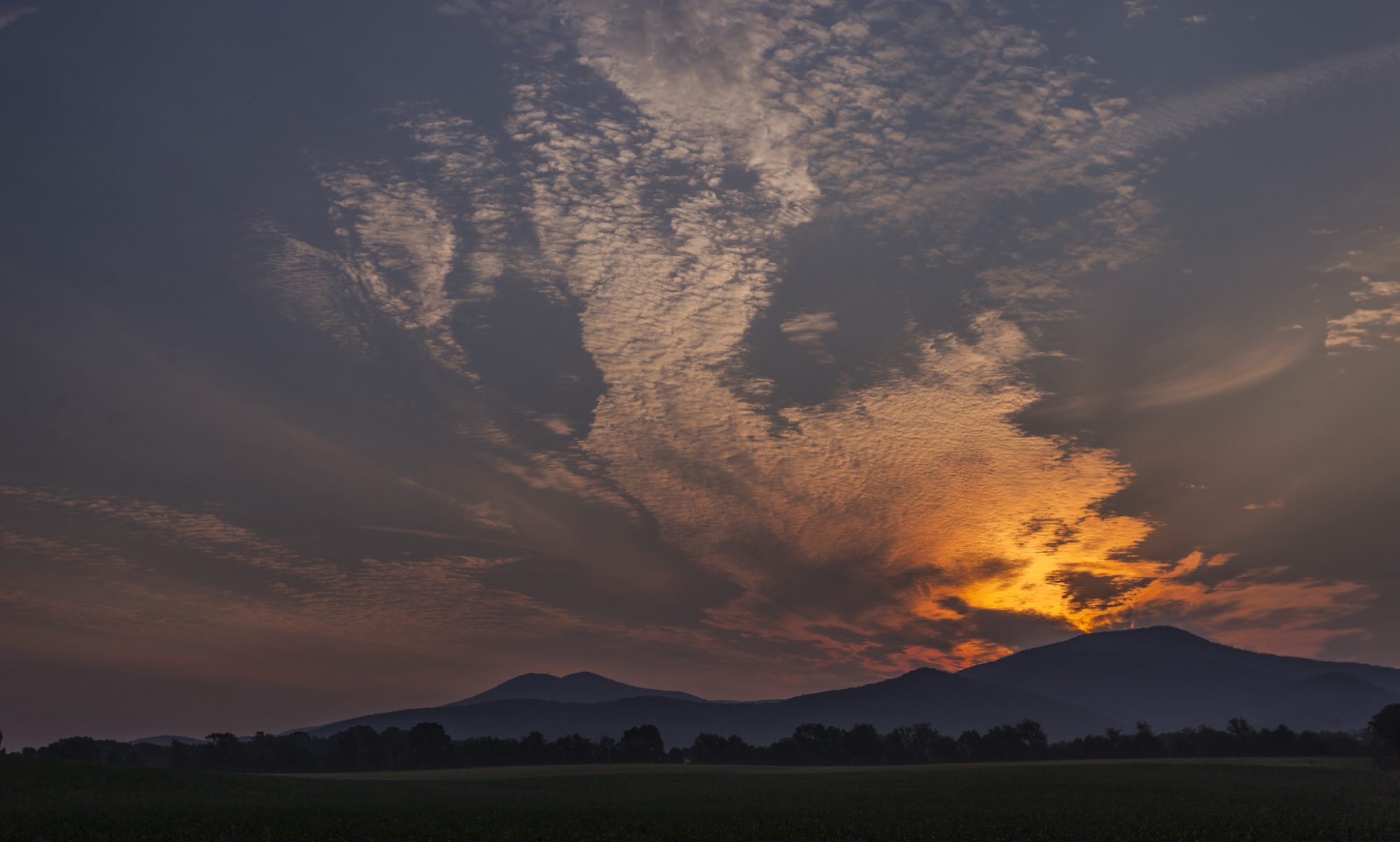


Click any stanza to explore its analysis, or use the icons above to navigate between views.
Plateaus and Highlands
Poet: Dr. Alireza Bemanian
|May 7, 2026
© www.bemanian.com
Select a stanza to traverse its meaning.
Destinations, plateaus, highlands and hills, mesas, the standing cliffs, knolls and tors,
the sceneries, backdrops, the reminders of attempts, endeavors, and challenges,
the choruses and carols; to abandon obstructions and impasses, to merge and shake the bases, roots and deeds,
to resent and reject the backers, believers, devotees and followers of the contained and confined dedications, ardors and dreams.
the waves and bearings, the rays and beams, undulations, gestures, the surges and surfs,
reverberate the sites, capitulate the senses, waterfalls accompany and cede,
attributers, allocators and assigners, to ascribe, impute and accredit,
congregations, parishioners and worshipers, admire and esteem, the copiousness, abundance, creation and the adoring feats.
perceptual, the reveries and trances, the mesmerizing sounds inclined and prone, to be constrained and circumscribed, or to jump and leap, still, the hesitancies, reluctancies and disinclinations only pursue to hide and seek.
Barracks, garrisons, the billets and the imposed lids, the vacant, derelict, and discarded adjoining links,
are they the howling, wailing, the lament and weeping of desperate beings, the mortals and selves, ensnared and confined by the sweeping haste and hurry, or the jarring and vexing, jeers, the catcalls, hisses; the cornered, harassed creatures, joining the herd, moaning heeds,
and then, the swallows and squashes, overwhelmed deprivations and squeezes, the momentums, impetuses and thrusts, the deliberations, reflections and thoughts simmer and seethe, fester and rankle; shimmers, glitters and shines, escape, evade not to be adjourned, recessed and interrupted, the journeys do not pacify or stop.
Mounds and mounts, the heaps and piles, commutations and valleys,
conjoin and skirt, adjoin and border, they are custodians, caretakers and the wardens,
blabbing, revealing and disclosing, that, breezes and wafts, zephyrs and drafts shall remain passersby,
the rooted trees attune solo songs, stand, to repress the flow, waft and blow,
foci, focused targets and purposes, if, circumvented, dodged, and evaded,
eluded, fudged and hedged, then, the strains, traumas and breeds, sprain, wrench and twist,
the burdens, linger, loiter, and dawdle, while the roots shrink, wither, and stem and wane.
intertwine and mingle, interlink and blend, braid and connect,
prance, cavort, thread and flounce, the fabric of creation, conceptions, and commencements, spread, fumble, and reach—
waves and seas, curls and surges, ripples and rollers interweave and interlace,
step and start, budge and shift, and nudge and jolt,
the alchemy reigns and runs, judge and lead. ascertain to proceed.
Parakeets, sparrows and canaries, gather to enrich, sonic conveyance,
it is the envy, forbid to covet, loudly, raucously, to murmur passages,
nuthatches, warblers, blackbirds, spread the ballet, rhumba, cavort and caper,
mobbing the eagles, enjoy to worship, revere and deify, this is the pray, convene and summon, convoke the moments, forget the pray.
And me, stretch my wings, forgo the clips, to join the tango,
and then, it is the will, ambition and wish, the testament, tribute, to follow the breeze,
prompt jumping and soaring, the steering and turning, coxing and bulling,
and the liveliness and bounciness of the breeze, begins from gist, coming out of soul,
still, reaches the turret, castle, citadel, unknown to era, epoch and eon,
it is your pitch, the field and ring, the forge of the cores, amalgamation of the ambiances, only you and me.
Alireza Bemanian • May 7, 2026 • © www.bemanian.com
Stanza Analysis
Analysis Documents
Dual Perspectives on “Plateaus and Highlands”
Independent Formal Analysis
The Dynamics of Liberation
Formal Analysis: “Inhale and Gasp” Poem: “Inhale and Gasp”
Poem: “Plateaus and Highlands”
Poet: Dr. Alireza Bemanian
Date of Composition: May 7, 2026
© www.bemanian.comCollection: Odyssey Volume 7
I. Introduction: The Dynamics of Liberation
Dr. Alireza Bemanian’s “Plateaus and Highlands” is an intricate, soaring seven-stanza exploration of the human struggle against stagnation, conformity, and external limitations. The poem traces a dramatic trajectory that begins in heavy, immovable geological and institutional structures and concludes in the boundless, kinetic freedom of flight. At its core, the poem investigates the friction between the safety of the known — the “confined dedications” — and the perilous, yet vital, necessity of spiritual ascent.
Unlike traditional poems of transcendence that end in solitary enlightenment, “Plateaus and Highlands” argues for a different kind of liberation. It suggests that true freedom is alchemical and fundamentally relational; the ultimate escape from the “imposed lids” of society leads not to isolation, but to an intimate, shared space — the “forge of the cores.” The poem is a masterclass in contrasting static weight with kinetic energy, moving seamlessly from the imagery of rocks and barracks to the fluid, chaotic ballet of birds and the inner wind of the soul.
II. Stanzaic Progression: From Stasis to Flight
Stanza I: The Geography of Obstruction The poem opens by setting the stage in physical terms: “Destinations, plateaus, highlands and hills, mesas, the standing cliffs, knolls and tors.” The accumulation of geological nouns immediately conveys a sense of gravity, immobility, and monumental scale. These are the “obstructions and impasses” of existence, standing as reminders of past endeavors. The stanza’s true force, however, emerges in its rejection of this stagnation. The speaker explicitly seeks to “resent and reject” those who accept “contained and confined dedications.” From the very first lines, the poem establishes a restless, rebellious spirit unwilling to settle for the prescribed limits of reality.
Stanza II: The Tension of Reverence and Restraint In the second stanza, the heavy earth yields to water and light: “the waves and bearings, the rays and beams.” The speaker observes the natural world and the human attempt to quantify it (“attributers, allocators and assigners”) and worship it (“congregations, parishioners”). While there is a deep reverence for the “copiousness, abundance, creation,” the speaker astutely notes a lingering psychological paralysis. Despite the mesmerizing pull to “jump and leap,” human nature often falls back on “hesitancies, reluctancies and disinclinations.” The stanza captures the profound tension between recognizing the majesty of existence and actually participating in it.
Stanza III: The Institutional Herd and the Breakaway Thrust Stanza III delivers the poem’s starkest critique of societal conformity, utilizing a militaristic and institutional vocabulary: “Barracks, garrisons, the billets and the imposed lids.” This is the architecture of human containment. The speaker hears the “wailing” and “lament” of “desperate beings… ensnared and confined by the sweeping haste and hurry.” This herd mentality reduces individuals to “harassed creatures” issuing “jeers” and “catcalls.” Yet, in the face of this despair, an opposing force begins to “simmer and seethe.” An inner momentum — the “thrusts” and “shimmers” — initiates a breakaway. The journey toward liberation, though embattled, “do[es] not pacify or stop.”
Stanza IV: The Peril of the Static Root Returning to earthly topography (“Mounds and mounts”), the fourth stanza contrasts the passing “breezes” with the “rooted trees” that attempt to “repress the flow.” Here, Dr. Bemanian introduces a vital psychological truth regarding purpose and evasion. If a person dodges their “foci, focused targets and purposes,” the result is not safety, but self-destruction. Evasion causes “strains, traumas and breeds, sprain, wrench and twist,” ultimately leading to a state where “the roots shrink, wither, and stem and wane.” The stanza acts as a stark warning: to remain rigidly rooted and avoid one’s true calling is to slowly die from within.
Stanza V: The Loom of Creation The fifth stanza is the poem’s crucible of transformation. The language shifts into a flurry of connective, dynamic verbs: “intertwine and mingle, interlink and blend, braid and connect.” The speaker describes the “fabric of creation” as a vast, moving tapestry where waves and ripples “interweave and interlace.” This is the moment of alchemical shift, where the elements of the world stop resisting each other and begin to collaborate. The directive to “step and start, budge and shift” signals the end of hesitation. The “alchemy reigns and runs,” commanding the self to finally proceed.
Stanza VI: The Exuberant Chorus Breaking free from earthly constraints, the poem erupts into the sky in Stanza VI. A vibrant congregation of birds — “Parakeets, sparrows and canaries,” followed by “nuthatches, warblers, blackbirds” — takes over the narrative. This is not a solemn, quiet spiritual awakening, but a loud, raucous celebration. The birds engage in a “ballet, rhumba, cavort and caper,” even playfully “mobbing the eagles.” The stanza beautifully captures the spontaneous joy of living, where creatures “forget the pray” simply because the act of their joyous existence is, in itself, the highest form of worship.
Stanza VII: The Sovereign Ascent and the Alchemical Union The final stanza brings the journey to its breathtaking climax as the speaker finally joins the ascent: “And me, stretch my wings, forgo the clips, to join the tango.” The most significant conceptual turn occurs when the poem reveals the source of the wind carrying the speaker. The “liveliness and bounciness of the breeze” is not an external weather pattern; it “begins from gist, coming out of soul.” The power to transcend is entirely self-generated. This autonomous flight reaches heights “unknown to era, epoch and eon,” yet it does not end in cold, isolated grandeur. It culminates in an intensely personal destination: “the forge of the cores, amalgamation of the ambiances, only you and me.” The ultimate liberation is found in total connection with another, a profound merging of essences.
III. Thematic and Conceptual Architecture
The Dialectic of Containment and Kinetics The poem’s structural backbone is built on a brilliant, sustained dialectic between opposing physical states. The opening movements are dominated by the crushing weight and immobility of containment (cliffs, barracks, imposed lids, vacant links). This heavy, geological, and institutional stasis is systematically shattered by the kinetic, fluid language that dominates the latter half of the poem (waves, tangos, surging, jumping, soaring). Meaning is generated in the intense friction between these two states; the poem insists that true momentum — the “escape” and “evade” of the third stanza — is only achieved by actively tearing away from the structures that seek to root us in place.
Avian Iconography and the Disruption of Hierarchy While birds are traditional symbols of the soul in literature, Dr. Bemanian drastically innovates upon this trope by giving his avian chorus a profoundly active, chaotic, and joyous character. They do not float passively as ethereal spirits; rather, they “rhumba,” “mob,” and “murmur loudly.” The image of small birds “mobbing the eagles” acts as a powerful metaphor for overturning established hierarchies and defying oppressive dominance. When the speaker adopts this avian nature, the true conceptual innovation is revealed: the breeze that lifts the wings originates from the soul itself. This advances a philosophy of radical spiritual autonomy — we are not lifted by the gods; we are the authors of our own ascension.
The Somatic Cost of Evasion The poem uniquely treats spiritual or psychological cowardice — the evasion of one’s intended purpose — not merely as a moral failing, but as a physical, somatic injury. Avoiding one’s “foci” results in “strains,” “traumas,” “sprains,” and a literal withering of the roots. This grounds the poem’s philosophical concepts directly in the body and nature, asserting that living inauthentically has a heavy, tangible, and structural cost that slowly erodes the self from the inside out.
The Architecture of Psychological Stagnation Dr. Bemanian masterfully maps internal states onto physical architecture. The “barracks, garrisons” and “imposed lids” represent the societal constructs that compel conformity and suppress individuality. The “derelict, and discarded adjoining links” are the casualties of this system — those who have given up the journey. The poem constructs these spaces to highlight the claustrophobia of the “herd” mentality, making the eventual breakout into the vast, open sky all the more exhilarating and vital.
IV. Comparative Literary Context
The Metaphysical Poets and the Intimate Cosmos The conclusion of “Plateaus and Highlands,” which reduces an entire grand, geological, and atmospheric journey down to the deeply intimate “only you and me,” strongly echoes the traditions of the 17th-century Metaphysical poets, particularly John Donne (as seen in works like “The Sun Rising” or “The Good-Morrow”). Dr. Bemanian, like Donne, argues that the most expansive, universal forces of creation and physical geography ultimately serve only to frame the profound connection between two individuals. The macrocosm collapses brilliantly into the microcosm, making their shared space the true center of the universe.
Percy Bysshe Shelley and the Internalized Wind Where Romantic poets like Shelley called upon majestic external forces to lift them (e.g., “Ode to the West Wind,” where the poet pleads for the wind to “make me thy lyre”), Dr. Bemanian radically internalizes this power. The breeze in “Plateaus and Highlands” does not arrive from the outside world to save the speaker; rather, it “begins from gist, coming out of soul.” This represents a profound, empowered shift from Romantic passivity to modern existential agency. The self is its own driving weather system.
Farid ud-Din Attar’s Conference of the Birds The vibrant avian imagery inevitably invites comparison to Attar’s 12th-century Sufi masterpiece. While Attar’s birds endure terrible, purifying hardships across seven valleys to find the divine Simorgh (only to realize they themselves are the Simorgh), Dr. Bemanian’s birds are immediately joyous, mischievous, and fully alive in the present moment. Furthermore, the destination of the speaker’s flight is not a dissolution into an abstract divine presence, but a return to a deeply human, relational reality at the “forge of the cores.”
Existential Phenomenology and the Rejection of the Herd The poem’s treatment of the “herd” and its “moaning heeds” aligns powerfully with existentialist thought, recalling Heidegger’s concept of das Man (the “they” or the crowd) and Sartre’s ideas of “bad faith.” The “constrained and circumscribed” individuals who join the herd live an inauthentic existence, shaped by the “sweeping haste and hurry.” Dr. Bemanian’s speaker rejects this conformity, embodying the existential hero who assumes absolute responsibility for their own “prompt jumping and soaring,” creating their own meaning against the backdrop of an indifferent landscape.
V. Philosophical Undertones
Agency Over Acquiescence “Plateaus and Highlands” is a resounding philosophical rejection of fatalism and societal compliance. The figures confined in the “barracks” live a life of “deprivations,” driven by fear and the “jarring and vexing” noises of the crowd. The poem champions the individual who refuses this safety, who resents the “followers of the contained and confined dedications,” and who deliberately stretches their wings. It posits that true living requires a constant, willed rebellion against the forces that seek to pacify and ground us.
Co-Creation as the Highest Reality By concluding the poem with the words “amalgamation of the ambiances, only you and me,” Dr. Bemanian posits that reality reaches its highest, most beautiful state not in isolation or solitary meditation, but in co-creation. The phrase “forge of the cores” is highly deliberate; a forge implies intense heat, immense pressure, and the metallurgical bonding of two separate, hardened elements into a stronger, unified alloy. It is a philosophy that elevates human connection from mere companionship to an elemental, world-building force.
The Illusion of the Static Destination The title itself, “Plateaus and Highlands,” introduces a philosophical paradox regarding the nature of achievement. Plateaus and highlands are elevated terrains, but they are flat; they are resting places, not absolute peaks. The poem philosophically asserts that there is no final, static destination in the life of the mind or soul. The “journeys do not pacify or stop.” Every height achieved is merely a new ground from which to launch the next “jumping and soaring.”
VI. Conclusion
“Plateaus and Highlands” is a masterfully orchestrated poem that maps the journey of the human spirit from the heavy, suffocating constraints of societal and internal fears to the absolute, unbridled freedom of self-generated flight. Dr. Bemanian uses a vast, shifting lexicon to move the reader through rugged topographies, stifling barracks, and alchemical waters, before finally releasing them into a sky vibrating with song and dance. It is a work that brilliantly fuses the macro-geography of the earth with the micro-geography of the human soul.
What makes this poem a unique and towering achievement is its ultimate revelation regarding the nature of freedom and ascent. The vast energy required to break free from the “imposed lids” of the world is not spent in pursuit of solitary grandeur or detached enlightenment. Instead, the entire cosmic and psychological journey is undertaken so that two souls might finally meet without constraints, blending perfectly in the intense heat of the “forge of the cores.” By redefining transcendence as profound, intimate connection, Dr. Bemanian asserts that our highest ascents and our greatest spiritual flights are, ultimately, in the service of love.
VII. About the Poet
Dr. Alireza Bemanian is a physicist and poet whose creative work bridges classical Persian literary traditions and contemporary English-language poetry. Holding doctoral degrees in Electrical Engineering — one in Electromagnetic Waves and Fields and a second in Control Systems — Dr. Bemanian brings analytical precision and systems thinking to his poetic practice. His background in physics and engineering informs both his diagnostic attention to the dynamics of psychological states and his conception of poems as structured systems with deliberate formal architectures.
His poetry is characterized by philosophical rigor, formal innovation, and sustained engagement with questions of fate, resilience, and transcendence. Dr. Bemanian’s signature technique of semantic architecture — building meaning through layered synonyms and near-synonyms — creates works that are simultaneously dense with implication and accessible in their naturalistic imagery. His bilingual poetic practice allows him to compose original Persian verses that serve as philosophical anchors for his English-language poems.
His work in the Odyssey collection examines fundamental questions of existence, from the atmospheric commons that sustains all breathing creatures to the interior flame of mystical devotion. His poetry integrates Western philosophical inquiry with Persian devotional traditions, creating verse that operates simultaneously as lyric, philosophy, and spiritual testimony. His work is published and archived at www.bemanian.com.
© Dr. Alireza Bemanian, www.bemanian.com Note: This analysis honors the intellectual property and creative vision of Dr. Alireza Bemanian. The poem “Plateaus and Highlands” is © 2026 www.bemanian.com, all rights reserved.
Extended Formal Analysis
The Cartography of the Soul
Extended Formal Analysis: “Plateaus and Highlands”
Poem: “Plateaus and Highlands”
Poet: Dr. Alireza Bemanian
Date of Composition: May 7, 2026
From the collection Odyssey May 7, 2026 © www.bemanian.com
© www.bemanian.comCollection: Odyssey Volume 7
I. Introduction: The Cartography of the Soul
“Plateaus and Highlands,” a soaring seven-stanza poem from Dr. Alireza Bemanian’s Odyssey collection, functions as a profound metaphorical cartography of human struggle, endurance, and ultimate transcendence. By mapping the internal landscape onto the physical geography of the earth — plateaus, hills, mesas, cliffs, and tors — the poem constructs a vivid, rigorous narrative of spiritual and psychological ascent. It charts a dynamic journey from stagnation, “imposed lids,” and “confined dedications,” through the alchemical blending of creation, culminating in an avian flight that represents the self breaking free from its tethers. The journey resolves in a breathtakingly intimate forging of souls — “the amalgamation of the ambiances, only you and me.”
The title is itself a programmatic statement. Both plateaus and highlands represent areas of raised ground — places of temporary rest after arduous climbing, but also vantage points from which the terrain above becomes visible, demanding further upward movement. Together, they announce a poem concerned not with a single, transcendent peak but with the sustained navigation of varied elevations — physical, cognitive, and psychological.
The poem is written in free verse, without a governing end-rhyme scheme, yet it achieves a powerful and distinctive musicality through pervasive internal alliteration, assonance, and the cascading accumulation of near-synonyms that constitutes Dr. Bemanian’s signature register. This maximalist lexical method — wherein dense clusters of terms drawn from the same semantic field are deployed in rapid succession — is not ornamental but structural and philosophical. Each cluster expands the conceptual field of its governing idea, refusing to settle for the reductive precision of a single word when the fullness of a concept demands the breadth of its entire vocabulary.
II. Stanza-by-Stanza Analysis
Stanza I: The Terrain of Aspiration and Rejection
“Destinations, plateaus, highlands and hills, mesas, the standing cliffs, knolls and tors,
the sceneries, backdrops, the reminders of attempts, endeavors, and challenges,
the choruses and carols; to abandon obstructions and impasses, to merge and shake the bases, roots and deeds,
to resent and reject the backers, believers, devotees and followers of the contained and confined dedications, ardors and dreams.”
The poem opens by mapping a landscape fraught with endeavor and physical presence: “Destinations, plateaus, highlands and hills, mesas, the standing cliffs, knolls and tors.” This is a terrain defined by both attainment and ongoing challenge. The opening word — “Destinations” — is purposive and forward-looking, but the cascade of geological forms imposes the reality of the arduous journey. The physical landscape serves as “reminders of attempts, endeavors, and challenges.” The stanza pivots sharply from description to an assertion of will: “to abandon obstructions and impasses, to merge and shake the bases, roots and deeds.” The speaker forcefully resents and rejects those who are content with limitation — the “followers of the contained and confined dedications, ardors and dreams.” The poem thus begins with a radical refusal to settle for diminished horizons.
Stanza II: Fluidity, Reverence, and Hesitation
“the waves and bearings, the rays and beams, undulations, gestures, the surges and surfs,
reverberate the sites, capitulate the senses, waterfalls accompany and cede,
attributers, allocators and assigners, to ascribe, impute and accredit,
congregations, parishioners and worshipers, admire and esteem, the copiousness, abundance, creation and the adoring feats.
perceptual, the reveries and trances, the mesmerizing sounds inclined and prone, to be constrained and circumscribed, or to jump and leap, still, the hesitancies, reluctancies and disinclinations only pursue to hide and seek.”
The rigid geological structures of the first stanza are answered in the second by fluidity and light: “the waves and bearings, the rays and beams, undulations, gestures, the surges and surfs.” This hydrological and luminous imagery introduces a dynamism that counters the static cliffs. Waterfalls “accompany and cede,” suggesting a natural surrender that stands in contrast to the human striving of Stanza I. The poem introduces the observers and participants — “attributers, allocators and assigners” and “congregations, parishioners and worshipers” — who admire “the copiousness, abundance, creation and the adoring feats.” Yet, within this vast perceptual field, human frailty persists. The “reveries and trances” are “constrained and circumscribed,” and despite the urge to “jump and leap,” Dr. Bemanian captures the profound psychological tension between the desire to ascend and the instinct to retreat: “still, the hesitancies, reluctancies and disinclinations only pursue to hide and seek.”
Stanza III: The Architecture of Confinement and the Seething Thrust
“Barracks, garrisons, the billets and the imposed lids, the vacant, derelict, and discarded adjoining links,
are they the howling, wailing, the lament and weeping of desperate beings, the mortals and selves, ensnared and confined by the sweeping haste and hurry, or the jarring and vexing, jeers, the catcalls, hisses; the cornered, harassed creatures, joining the herd, moaning heeds,
and then, the swallows and squashes, overwhelmed deprivations and squeezes, the momentums, impetuses and thrusts, the deliberations, reflections and thoughts simmer and seethe, fester and rankle; shimmers, glitters and shines, escape, evade not to be adjourned, recessed and interrupted, the journeys do not pacify or stop.”
The third stanza plunges back into a world of institutional and psychological suppression: “Barracks, garrisons, the billets and the imposed lids, the vacant, derelict, and discarded adjoining links.” These structures represent the oppressive machinery of societal and psychological forces that confine human potential. The “imposed lids” suppress aspiration before it can rise. Dr. Bemanian asks whether these are the “wailing, the lament and weeping of desperate beings… ensnared and confined by the sweeping haste and hurry.” Alternatively, they might be the “jarring and vexing, jeers, the catcalls, hisses” of “cornered, harassed creatures, joining the herd.” This is the poem’s darkest vision of societal conformity. However, the stanza refuses to end in despair, pivoting instead to overwhelming, breakout forces: “the momentums, impetuses and thrusts.” Even as “deliberations, reflections and thoughts simmer and seethe, fester and rankle,” a brilliant breakaway energy emerges: “shimmers, glitters and shines, escape, evade not to be adjourned, recessed and interrupted, the journeys do not pacify or stop.” The soul’s forward momentum is irrepressible.
Stanza IV: The Rooted Resistance
“Mounds and mounts, the heaps and piles, commutations and valleys,
conjoin and skirt, adjoin and border, they are custodians, caretakers and the wardens,
blabbing, revealing and disclosing, that, breezes and wafts, zephyrs and drafts shall remain passersby,
the rooted trees attune solo songs, stand, to repress the flow, waft and blow,
foci, focused targets and purposes, if, circumvented, dodged, and evaded,
eluded, fudged and hedged, then, the strains, traumas and breeds, sprain, wrench and twist,
the burdens, linger, loiter, and dawdle, while the roots shrink, wither, and stem and wane.”
The fourth stanza returns to the topographical lexicon — “Mounds and mounts, the heaps and piles, commutations and valleys” — before establishing a powerful juxtaposition between the transient and the steadfast. The “breezes and wafts, zephyrs and drafts shall remain passersby,” forces that drift through without commitment. Against them stand “the rooted trees,” which “attune solo songs, stand, to repress the flow, waft and blow.” The tree is an emblem of committed, individuated purpose: solitary, resistant, enduring. The stanza’s philosophical fulcrum arrives here: if “foci, focused targets and purposes” are “circumvented, dodged, and evaded, / eluded, fudged and hedged,” then the consequence is profound injury: “the strains, traumas and breeds, sprain, wrench and twist.” The evasion of one’s calling is not neutral but causes somatic and structural damage. The final line amplifies this with precision: “the burdens, linger, loiter, and dawdle, while the roots shrink, wither, and stem and wane.” Purposelessness erodes the self from below until the living source of growth has waned entirely.
Stanza V: The Alchemy of Becoming
“intertwine and mingle, interlink and blend, braid and connect,
prance, cavort, thread and flounce, the fabric of creation, conceptions, and commencements, spread, fumble, and reach—
waves and seas, curls and surges, ripples and rollers interweave and interlace,
step and start, budge and shift, and nudge and jolt,
the alchemy reigns and runs, judge and lead. ascertain to proceed.”
A dramatic shift occurs in the fifth stanza as the poem moves into dynamic, interwoven action. The language erupts with verbs of connection and creation: “intertwine and mingle, interlink and blend, braid and connect.” Dr. Bemanian envisions existence as a vast, moving textile — “the fabric of creation, conceptions, and commencements, spread, fumble, and reach.” The triadic arc from making through ideation to initiation is complicated by the realistic note of “fumble”: creation is not effortless; it reaches and stumbles. The stanza turns again to water: “waves and seas, curls and surges, ripples and rollers interweave and interlace.” Motion, connectivity, and interweaving are the dominant registers. The stanza closes with the poem’s governing declaration: “the alchemy reigns and runs, judge and lead. ascertain to proceed.” Alchemy here is not mysticism but the structural principle of transformation — the conviction that materials brought into genuine contact with one another produce something entirely new.
Stanza VI: The Avian Chorus
“Parakeets, sparrows and canaries, gather to enrich, sonic conveyance,
it is the envy, forbid to covet, loudly, raucously, to murmur passages,
nuthatches, warblers, blackbirds, spread the ballet, rhumba, cavort and caper,
mobbing the eagles, enjoy to worship, revere and deify, this is the pray, convene and summon, convoke the moments, forget the pray.”
The sixth stanza introduces an explosion of life and sound, moving upward into the avian realm: “Parakeets, sparrows and canaries, gather to enrich, sonic conveyance.” This chorus of smaller birds murmurs passages “loudly, raucously,” spreading “the ballet, rhumba, cavort and caper.” They are “mobbing the eagles,” an act that combines defiance, reverence, and chaotic worship. The stanza captures the joyful and urgent “pray” of the natural world, convening and summoning the moment, only to “forget the pray” in the sheer exuberance of immediate existence. This chorus acts as the vital springboard for the poem’s final, individual ascent.
Stanza VII: The Soaring Encounter
“And me, stretch my wings, forgo the clips, to join the tango,
and then, it is the will, ambition and wish, the testament, tribute, to follow the breeze,
prompt jumping and soaring, the steering and turning, coxing and bulling,
and the liveliness and bounciness of the breeze, begins from gist, coming out of soul,
still, reaches the turret, castle, citadel, unknown to era, epoch and eon,
it is your pitch, the field and ring, the forge of the cores, amalgamation of the ambiances, only you and me.”
The final stanza is the poem’s luminous resolution, shifting the perspective from the observing eye to the ascending self: “And me, stretch my wings, forgo the clips, to join the tango.” The speaker sheds all remaining restraints (“clips”) to participate in the universal dance. Driven by “will, ambition and wish, the testament, tribute, to follow the breeze,” the ascent is characterized by “prompt jumping and soaring, the steering and turning, coxing and bulling.” Crucially, this flight is not merely a reaction to external forces; “the liveliness and bounciness of the breeze, begins from gist, coming out of soul.” The power to ascend originates within. This internal wind carries the self to unprecedented heights, reaching “the turret, castle, citadel, unknown to era, epoch and eon.” Yet, the poem does not end in solitary majesty. The journey toward the ultimate pinnacle leads to a deeply intimate encounter: “it is your pitch, the field and ring, the forge of the cores, amalgamation of the ambiances, only you and me.” All the arduous climbing and alchemical transformation arrive here: at the forging of two cores, blending completely in a shared space. The highest altitude the human spirit can achieve is the capacity to unite with another.
III. Conceptual Innovations
- Topology as Epistemology: The Architecture of Knowing The most profound conceptual innovation of “Plateaus and Highlands” is its treatment of topology as an epistemology — using the physical dimensions of height, depth, and expanse as structural equivalents for the act of knowing itself. The poem refuses abstraction, insisting that cognitive and spiritual states possess spatial, geographical characteristics. “Mesas, the standing cliffs” are not merely descriptive settings but cognitive blockages. Knowledge, in this poem, is not acquired by passive reflection but by a muscular, gravitational struggle.
- The Lexical Fugue and the Poetics of Exhaustion A hallmark of Dr. Bemanian’s mature style, demonstrated with particular mastery here, is the deployment of cascading synonymic clusters — what might be termed a “lexical fugue.” By refusing to settle on a single, reductive signifier, Dr. Bemanian acknowledges the vast, slippery, irreducible nature of truth. The rapid-fire sequencing forces the reader to experience the density and layered complexity of the emotion or state being described, mimicking the overwhelming sensory input of the world itself.
- The Alchemical Dialectic: From Stasis to Surge Structurally, the poem is governed by a powerful dialectic between constraint and explosive movement. Stanza III establishes a world built of “barracks” and “imposed lids” — forces of containment. The dynamic collision between this static confinement and the surging “alchemy” of Stanza V is the engine of the soul’s ascent. Spiritual transformation requires the intense heat and pressure of conflict to “judge and lead… ascertain to proceed.”
- The Avian Metaphor of Ascent In the final stanzas, the poem innovates on the traditional metaphor of flight. The birds are not mere symbols of freedom but active participants in a chaotic, holy communion. When the speaker finally stretches their own wings, the “breeze” that lifts them is paradoxically generated from within—”coming out of soul.” Freedom is thus depicted not as an escape from gravity, but as an internal force of spiritual buoyancy.
- The Rejection of Solitary Transcendence Perhaps the poem’s most startling and vital conceptual claim is its rejection of solitary transcendence as the endpoint of the journey. Much of the Western visionary tradition imagines the summit of human achievement as a place of isolated, detached enlightenment. “Plateaus and Highlands” refuses this model entirely. The entire arduous climb resolves not in solitary glory but in the “forge of the cores” — “only you and me.”
IV. Comparative Literary Context
Walt Whitman and the Vertical Sublime In its expansive, cataloguing nature, “Plateaus and Highlands” bears a structural resemblance to the sweeping, enumerative lines of Walt Whitman’s Leaves of Grass. Dr. Bemanian, however, subverts this tradition by employing the catalogue for a distinctly vertical purpose. The accumulation of nouns is entirely aspirational. The subject is not diminished by the vast terrain; the subject is “tenaciously” ascending it, breaking past “confined dedications.”
The Persian Mystical Ascent: Attar and Rumi The poem’s underlying architecture of spiritual ascent resonates profoundly with the classical Persian and Sufi literary traditions, particularly with Farid ud-Din Attar’s The Conference of the Birds and Jalal ad-Din Rumi’s Masnavi. Attar’s birds journey through immense valleys to find the ultimate truth; Dr. Bemanian’s seven stanzas chart a structurally analogous passage through constraint, resistance, and alchemical becoming. Like the mystical birds, the speaker stretches their wings to “join the tango,” finding ultimate reality not in dissolution, but in the intimate “amalgamation of the ambiances.”
Hafez’s Divan is everywhere present in the breeze that “begins from gist, coming out of soul.” The Hafezian wind (bad) is never merely meteorological — it carries message, longing, and the fragrance of the Unseen Beloved. That Dr. Bemanian’s breeze originates in “gist” — in essential meaning itself — and culminates in reaching a “turret, castle, citadel, unknown to era, epoch and eon” echoes Hafez’s conviction that the beloved’s dwelling is beyond temporal reckoning. The citadel unknown to era is the Hafezian wine house (meykhane) projected into architecture: a space outside ordinary time where the soul’s longing finds its ground.
Gerard Manley Hopkins and Sprung Lexical Energy whose “The Windhover” offers the most sustained meditation on bird-flight as spiritual aspiration in English poetry, provides a formal parallel in his compressed lexical accumulation: “brute beauty and valour and act, oh, air, pride, plume, here / Buckle!” Hopkins’s sprung rhythm and triple-verb cascades resemble Dr. Bemanian’s “prance, cavort, thread and flounce.” Both poets understand that the surfeit of synonymic variation is not decorative but kinetic: it enacts the energy it describes. The verbs do not name the motion; they perform it.
Hopkins’s dense compound coinages and his commitment to capturing the “inscape” of things find a contemporary parallel in Dr. Bemanian’s insistence on the full semantic field of each concept. The driving phonetic energy of the poem recalls Hopkinsian sprung rhythm in its percussive accumulation and its refusal of the merely decorative.
Keats’s “Ode to a Nightingale” inhabits the same psychological territory as Dr. Bemanian’s second stanza: the threshold between the mortal and the transcendent, the ache to join the bird’s immortal song. “Do I wake or sleep?” Keats asks as the music recedes. But where Keats’s speaker retreats, Dr. Bemanian’s does not. The clips are forgone; the wings stretch; the tango is joined. The poem enacts a resolution that Keats’s Romantic aesthetics could only mourn as impossible — not because Dr. Bemanian is less honest about hesitancy, but because his philosophical commitments refuse the beauty of irresolution as the only final position.
Blake’s “London” and the Mental Manacles passages of the Prophetic Books inform the third stanza’s military architecture: “barracks, garrisons, the billets and the imposed lids.” For Blake, the prison of the mind is self-forged — “mind-forged manacles.” Dr. Bemanian’s “imposed lids” are similarly interior as much as structural: the cornered creature joins the herd not because external bars prevent escape but because the sweeping haste of social life has enclosed the will from within.
Dante’s ascent through Purgatorio and into Paradiso provides the structural analogue for the poem’s movement from confinement (stanza three) through landscape testimony (stanza four) and alchemical weaving (stanza five) to elevated flight (stanza six). The turret, castle, citadel that the soul reaches — “unknown to era, epoch and eon” — has the quality of Dante’s Empyrean: a destination outside time. The forge of the cores recalls Paradiso’s argument that love is the final architecture of the universe — the force che move il sole e l’altre stelle — and that the summit of the journey is always relational, always a dyad.
Pindar’s epinician odes celebrate excellence (arete) achieved through accumulated effort, and his understanding that glory is lost when purposes are systematically evaded resonates with Bemanian’s fourth stanza. To circumvent and hedge one’s focused targets is, in Pindar’s terms, to let the root wither. Pindar’s odes are also catalogs of accumulated synonymic praise, and his conviction that language must be as superabundant as the glory it celebrates is reflected in Dr. Bemanian’s synonymic clusters.
Paul Celan’s dense lexical forging — his later poems hammered into being from the most reluctant material of language itself — resonates with Bemanian’s “forge of the cores, amalgamation of the ambiances.” Both poets understand the act of writing as metallurgical: something must be smelted under extreme pressure before the poem can arrive at its essential form. For Celan, the forge is historical trauma transformed into testimony; for Dr. Bemanian, it is the amalgamation of all the ambiances — landscapes, hesitancies, avian choirs, and the beloved — into a relational space that is both destination and dwelling.
V. Philosophical Claims
- Confinement’s subtlest agents are its devotees, not its opponents. The most dangerous obstacle to liberated aspiration is not the overt oppressor but the faithful servant of the contained dream — the backer, the devotee whose ardors have been shaped by boundaries never questioned. To “resent and reject” them is more demanding than opposing an enemy because it requires distinguishing genuine devotion from loyal confinement — a distinction the confined devotee often cannot perceive.
- Psychological resistance does not dissolve upon the decision to act; it hides. The hesitancies, reluctancies, and disinclinations “pursue to hide and seek” — they retreat when the will advances but do not disappear. Courage is not the absence of reluctance but its perpetual re-confrontation. The leap must be chosen not once but continuously.
- Rootedness without flow produces atrophy. When a rooted being represses the breezes that pass through it and its focused purposes are systematically evaded, the roots themselves shrink. The organism that refuses to engage its proper direction withers not at the crown but at the root — the deepest structures decay before the surface shows it. Stagnation is not equilibrium; it is slow diminishment working from the inside outward.
- Purpose is Constitutive of Integrity The poem’s fourth stanza asserts that the evasion of “foci, focused targets and purposes” does not merely fail to achieve goals but actively damages the self: “the roots shrink, wither, and stem and wane.” This is a claim consonant with the Aristotelian tradition of teleological ethics: the human being has an essential orientation toward purposive action, and sustained deviation from that orientation is injurious.
- Creation is Inherently Connective Stanza V’s weaving metaphor — “the fabric of creation, conceptions, and commencements” — advances the claim that all acts of creation are fundamentally relational, not originary ex nihilo events. Creation “intertwines,” “mingles,” and “braids”: it is always the conjunction of existing threads, consistent with a process-philosophical ontology.
- The Primacy of the Inner Will The poem philosophically posits that the forces lifting us are not entirely external. The “breeze” that propels the final ascent “begins from gist, coming out of soul.” True transcendence is fueled by internal volition; the external journey merely mirrors the internal unfolding of the soul’s power.
VI. Conclusion
“Plateaus and Highlands” is a towering achievement of contemporary lyric poetry, magnificent in its scale and meticulous in its execution. Its seven stanzas trace a rigorously coherent arc — from the impositions and hesitancies of the opening terrain, through the alchemical middle of creation and connection, to the soaring heights of the avian chorus and the final, intimate “forge of the cores.”
The topographical lexicon that organizes the poem is not merely pictorial but structural and philosophical: the poem’s world is a landscape in which every physical feature is simultaneously a cognitive condition and a spiritual threshold. The poem stands as a powerful counter-narrative to modern cynicism and disconnection, utilizing a poetics of abundance to insist on the irreducible complexity of experience. In its final movement, the poem stakes its most original and compelling claim: that the highest altitude the human spirit can achieve is not solitary, detached enlightenment but the radical merging of souls. It asserts, with majestic force, that the ultimate destination of the long journey across plateaus and highlands is the profound, shared connection of “only you and me.”
VII. About the Poet
Dr. Alireza Bemanian is a physicist, engineer, and poet whose creative work bridges classical Persian literary traditions and contemporary English-language poetry. Holding doctoral degrees in Electrical Engineering — one in Electromagnetic Waves and Fields and a second in Control Systems — Dr. Bemanian brings analytical precision and systems thinking to his poetic practice. His engineering background informs both his diagnostic attention to the dynamics of psychological states and his conception of poems as structured systems with deliberate formal architectures.
His poetry is characterized by philosophical rigor, formal innovation, and sustained engagement with questions of fate, resilience, and transcendence. Dr. Bemanian’s signature technique of semantic architecture — building meaning through layered synonyms and near-synonyms — creates works that are simultaneously dense with implication and accessible in their naturalistic imagery. His bilingual poetic practice allows him to compose original Persian verses that serve as philosophical anchors for his English-language poems.
His work in the Odyssey collection examines fundamental questions of existence, from the atmospheric commons that sustains all breathing creatures to the interior flame of mystical devotion. His poetry integrates Western philosophical inquiry with Persian devotional traditions, creating verse that operates simultaneously as lyric, philosophy, and spiritual testimony. His work is published and archived at www.bemanian.com.
© Dr. Alireza Bemanian, www.bemanian.com Note: This analysis honors the intellectual property and creative vision of Dr. Alireza Bemanian. The poem “Plateaus and Highlands” is © 2026 www.bemanian.com, all rights reserved.